
In Maury County, the ground under your yard is not a stable shelf. Expansive clay soil swells when it absorbs water and shrinks when it dries, and it repeats that cycle every wet season and every dry spell. A sewer line buried in that soil gets squeezed, shifted, and flexed a little at a time, year after year. Add tree roots hunting for moisture and an older pipe material that was never designed for that much movement, and you have the three-force story behind most sewer failures in this part of Middle Tennessee. The good news: none of the three forces is a mystery, and a camera inspection can show exactly which one is winning before you commit to a repair method.
Force 1: The Soil Moves
Clay particles are tiny plates that absorb water between their layers. When the soil wets up, those plates push apart and the ground swells; when it dries, the plates collapse and the ground shrinks. A buried line rides that movement. Over many cycles, joints can separate slightly, the line can belly or shift grade, and rigid pipe walls can crack where stress concentrates. Freeze-thaw movement in winter adds another round of shifting on top of the wet-dry cycle.
You can see the surface evidence if you know what to look for: cracks in the soil during dry spells, sticking doors and windows, and small foundation movements are all signs of the same expansive behavior. That does not mean every home with clay soil has a failing sewer line — it means the soil is an active participant in the line's life, and a line that was installed with poor bedding or shallow cover will feel it sooner. In the clay soil foundation plumbing conversation, the sewer lateral is the part homeowners forget, because it is the part they never see.
Force 2: Roots Follow the Moisture
Tree roots do not attack pipes out of malice. They grow toward moisture, and a sewer line is a year-round water source. A tiny gap at a joint, a hairline crack, or a slightly separated connection releases enough moisture into the surrounding soil to attract fine root hairs. Once inside, those roots grow, trap paper and waste, and widen the opening. What started as a pinhole becomes a root mass that blocks flow and eventually breaks the pipe.
Mature trees near the line's path raise the odds, but distance alone is not a guarantee: roots routinely travel farther than the canopy edge. The warning signs are easy to misread as ordinary drain trouble — a toilet that gurgles when the washer drains, a tub that backs up when a toilet flushes, or one drain that keeps clogging after it was just cleared. When several fixtures misbehave at once, think main line, not single fixture.
Force 3: Old Pipe Meets New Stress
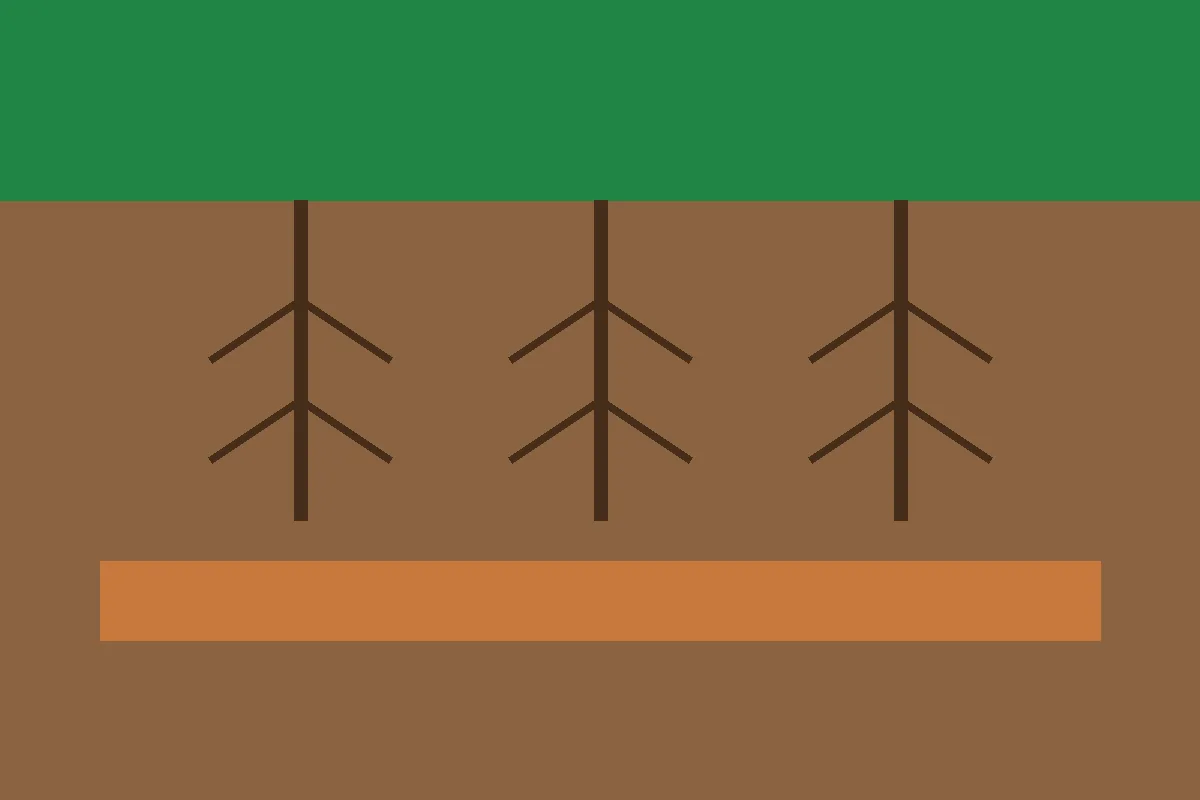
The third force is the pipe itself. Older clay and cast-iron lines handle ground movement worse than modern materials. Clay segments are short and jointed, so every joint is a place for soil movement and roots to act. Cast iron corrodes from the inside, thinning until normal pressure and normal ground stress are enough to crack it. A newer plastic line in the same soil is not invincible — poor bedding or a sharp rock can still damage it — but it flexes and seals better than the older materials. Age does not doom a line by itself, but age plus movement plus roots is the combination that ends lines.
Corrosion deserves a plain-language note. Waste exposure and soil chemistry thin older pipe walls from the inside and the outside at the same time. By the time a line shows symptoms, the wall may already be far thinner than it was when installed. That is why a line that was “fine last year” can fail this year: the last bit of wall finally gives way under an ordinary load.
Camera First, Method Second
Because the three forces produce similar symptoms, guessing the repair method from symptoms alone is a mistake. A sewer camera inspection answers the questions that actually decide the fix: where is the damage, how long is it, is the line still round and on grade, and is the surrounding soil stable enough to support a lining? The camera footage is the difference between a repair chosen for your line and a repair chosen from a price list.
Where the line is a good candidate, trenchless methods repair or replace the line through small access points instead of an open trench across the yard. Lining installs a new pipe wall inside the old one; bursting pulls a new pipe through the old path. Both avoid rebuilding driveways, walkways, and landscaping, which is often the largest hidden cost of an open dig. Where the line has collapsed, lost grade, or bellied badly, an open repair may still be the honest answer. A trustworthy recommendation starts with the footage and explains why the suggested method fits what the camera found. Our sewer line repair in Spring Hill starts with that camera inspection, so the method follows the evidence.
One more habit that pays off: know where your cleanout is before you need it. The cleanout is the access point a camera and a cable enter through, and a buried or paved-over cleanout adds time and cost to every sewer job. If you do not know where yours is, ask during any routine visit and mark it.
Quick Answers
Why do sewer lines crack in clay soil?
The soil swells when wet and shrinks when dry, flexing the buried line through repeated cycles. Over time, joints separate and rigid walls crack where stress concentrates.
Are roots or soil the bigger risk?
It depends on the home. Soil movement affects every buried line in clay ground; roots matter most where trees stand near the line's path. The two often work together — movement opens a gap, roots find it.
When does trenchless work?
When the line is still roughly round and on grade and the damage is a crack, joint failure, or root intrusion rather than a collapse or a lost grade. The camera decides.
How do I know if my line is shifting?
Watch for multiple slow drains, gurgling fixtures, sewage odor, soggy yard spots, and repeated backups. One slow drain is a fixture problem; several at once point to the line.
Clay soil is not a defect in your property — it is the ground Middle Tennessee is built on. What matters is whether the line under it is still sound, and the only way to know is to look. A camera inspection turns a worry about the yard into a fact about the pipe, and a fact about the pipe turns into a repair you can plan instead of an emergency you have to survive. The plumbing system in a home includes everything from the tap to the street, and the buried part deserves the same attention as the visible part.
Back to the blog · Sewer line repair in Spring Hill · Plumber in Maury County