Plumber in Wades Grove, Spring Hill TN
Wades Grove is a family area of 2000s homes — old enough for wear, young enough that a check now prevents the expensive surprise later.
Licensed & Insured · Locally Owned & Operated
Mon–Fri 7AM–7PM · Sat 8AM–4PM · 24/7 Emergency
Serving This Area
Know what is in your walls before you need to
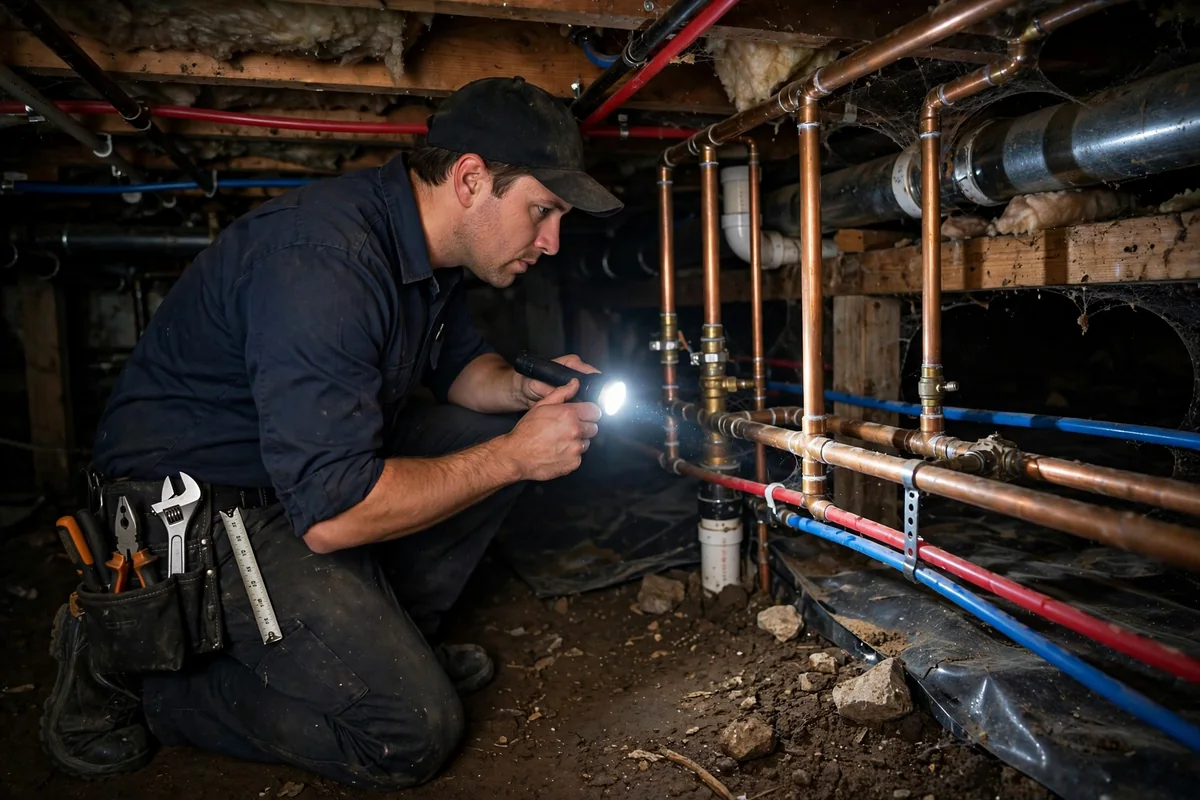
Homes here are generally mid-size family homes from that decade, and the most telling question about a home from that era is also the simplest: what are the pipes made of? The answer differs house by house, and it is worth knowing before a leak forces the question. A short check of the visible runs — near the water heater, at the meter, in the crawl space — and identifies what is actually there.
The lines tell different stories. Copper lines are durable and familiar. Flexible cross-linked runs are modern and forgiving. Galvanized steel lines narrow from the inside as they age, which shows up as sinking pressure. Gray plastic supply pipe from an earlier era is the one that worries buyers most, because it can fail at joints with little warning — but it should never be taken as present in a home of this age. How household pipework evolved over time is a worthwhile background read before your check.
We present every finding as a check result, not a local guess. If your home has the coated lines, we talk about what that means for pressure and planning. If it has the gray line, we talk about replacement timing. If it has copper or the flexible tubing, we talk about everything else. The check takes less than an hour and replaces guessing with facts.

Licensed & Insured · Locally Owned & Operated
Pressure, color, and other early clues
Homes usually announce pipe trouble early, in small ways. Pressure that falls across the whole house — not just one faucet — points to the supply lines narrowing or a regulator drifting. Water that runs cloudy for a few seconds after sitting overnight points to corrosion or sediment in aging lines. A pinhole leak that stains a ceiling is a late clue, not an early one; the early clues are quieter.
Warm spots on a floor, a bill that climbs for no reason, and the sound of running water with every fixture off all point to a hidden leak. A meter check confirms it: with every fixture off, the meter should sit still. From there, acoustic listening and pressure checks narrow the location before any floor or wall is opened.
Family homes add one more wrinkle: mornings. Kitchen, laundry, and baths all peak together, so a marginal supply line shows itself at 7 a.m. before it shows anywhere else. If pressure only dips at peak times, the cause may be sizing or a valve, not the pipe material at all — which is why diagnosis comes before recommendation.

Licensed & Insured · Locally Owned & Operated
Patch, plan, or replace: how to decide
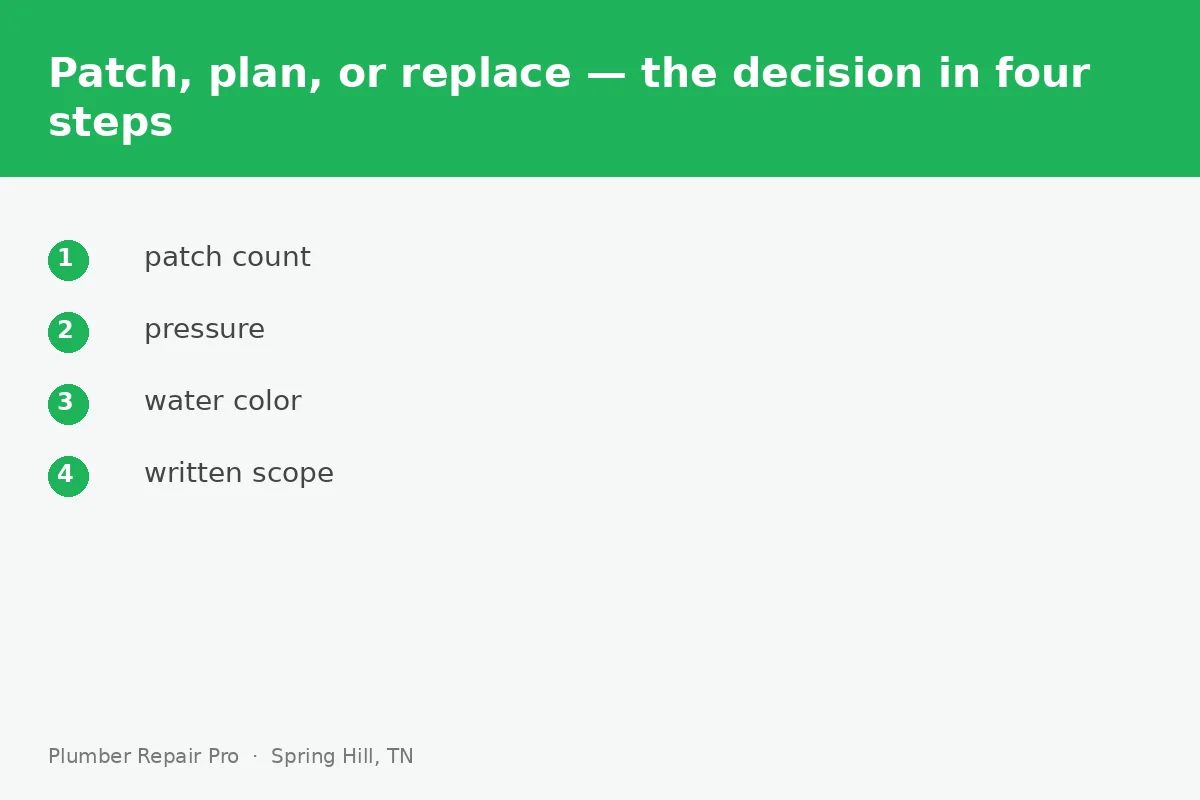
The hardest plumbing decision in a home from that era is also the most common: patch this leak, or plan a larger fix? Our rule of thumb is the patch count. One isolated leak in an otherwise healthy system is a repair. Repeated leaks in different rooms, sinking pressure across the house, and discolored water together point to a system that has reached the end of its reliable life — and a planned replacement usually costs less, in money and disruption, than a string of emergency visits.
Replacement does not have to happen all at once. Phased work — the worst runs first, the rest on a schedule — fits many households, as long as the plan is written down and the drywall work is not paid for twice. Choice of line matters too: the flexible line and the metal line each suit different houses, and routing decides how much patching the job needs.
Whatever you choose, get the decision in writing first: what will be replaced, what will be left, how the walls will be closed, and what the heater and fixture checks will cover at the same time. A written scope turns a scary project into a scheduled one.
- One isolated leak: usually a repair.
- Leaks in different rooms: a system question, not a spot question.
- Sinking pressure plus cloudy water: plan a replacement discussion.
- Any plan: written scope, phased if needed, walls closed as part of the job.
Licensed & Insured · Locally Owned & Operated
Find This Area on the Map
This is a traditional suburban family community on the Maury County side of Spring Hill, with craftsman and contemporary single-family homes, a pool, parks, and walkable schools.
View Wades Grove on Google Maps
Plumbing Help for Homes Here
Whole-House Repiping
Whole-home pipe replacement, planned around your house.
Leak Detection & Repair
Pinpointing hidden water leaks without opening every wall.
Everyday Household Plumbing Repair
Everyday household fixes, checks, and upkeep.
See the full list on our Spring Hill neighborhoods page, or read about plumbing across Maury County. When you are ready, reach our team here.
Your plumbing, decided on facts
Know your pipework, catch the early clues, and decide with a written scope. Book a pipework check or a leak-finding visit.
Mon–Fri: 7AM – 7PM · Sat: 8AM – 4PM · 24/7 Emergency Service
Licensed & Insured · Locally Owned & Operated