Patch Or Replace The System?
Whole-House Repiping in Spring Hill, TN
Three emergency calls can cost more than one planned repiping job. When leaks keep appearing in different places, the system is telling you it is done being patched.
Licensed & Insured · Locally Owned & Operated
Mon–Fri 7AM–7PM · Sat 8AM–4PM · 24/7 Emergency
Repair Vs System Decision
When Patching Stops Making Sense
Every house reaches a point where the next leak is not a surprise but a schedule. Rusty water, falling pressure, pinhole leaks in different rooms, and a repair history that keeps growing all point the same way. At that point the question is no longer which fitting failed. It is whether the system has failed.
When homeowners ask about a whole-system replacement, they usually mean the whole system at once: every supply run, new valves, new connections, and a house that stops leaking for good. This page explains how to tell when that is the right call, what the work involves, and how it differs from a spot repair.
Repiping Services
Repiping Services: One Planned Job Instead Of Repeat Emergencies
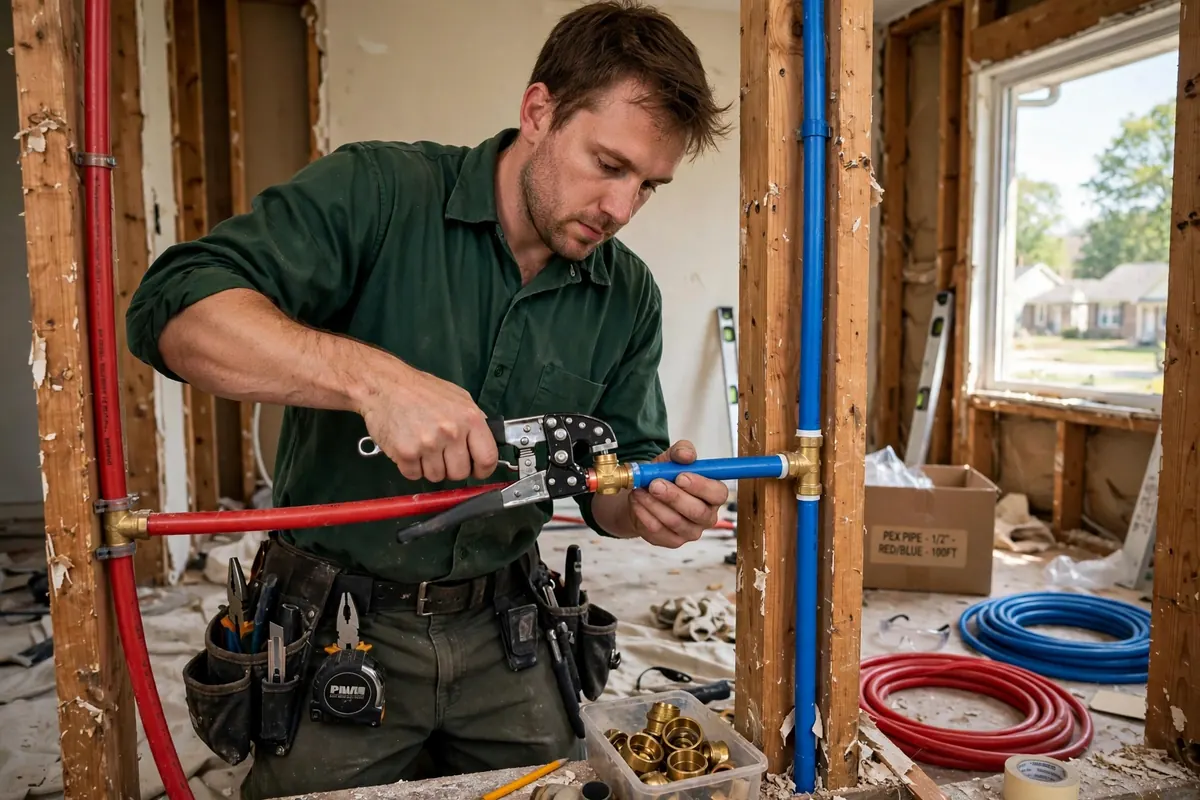
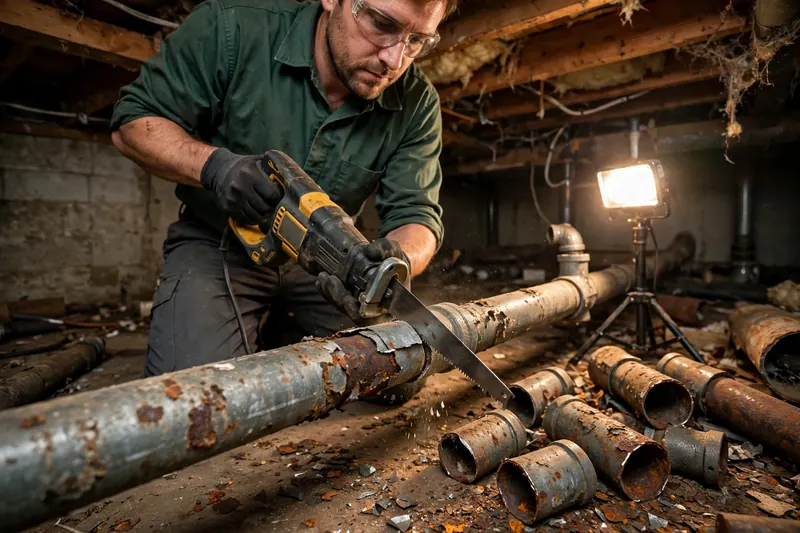
House plumbing from the Poly-B era or the galvanized era carries a known clock. Poly-B, the gray plastic used in many homes from the 1980s into the mid-1990s, and galvanized steel, which narrows from the inside as it corrodes, both fail in patterns rather than single events. A repipe specialist looks at the material, the age, and the leak history together, because any one of them alone can mislead.
The patch-count rule we use is simple. One leak is a repair. Two leaks in a year is a warning. Three leaks in different places is a system telling you it is done. At that point, each new patch buys a shorter quiet period than the last, and the drywall work gets paid for twice. A full repiping job replaces the system once, with new pipe, new valves, and a pressure test on every run before the walls close.
Water pipe plumbing that has failed repeatedly usually shows the same signs: discolored water after the house sits overnight, pressure that falls when two fixtures run, and pinholes that appear in unrelated rooms. If that sounds like your house, call our service team for an inspection. We will show you the pipe material, the condition, and the honest math between one more patch and a full replacement.
Q: What does a repiping inspection look for?
A: Pipe material, age, leak history, water quality, and access. We show you the pipe condition and the honest math between one more patch and a full replacement.
Pipe Installation, Repair & Replacement
Spot Work Versus Full Replacement
Not every pipe problem needs a whole-house job. A single failed joint, a frozen split in one run, or a pinhole in an otherwise sound copper line is a spot repair, and we do plenty of them. Whole-system decisions usually start with the pattern, not the point. Spot work fixes a point. Repiping fixes a system.
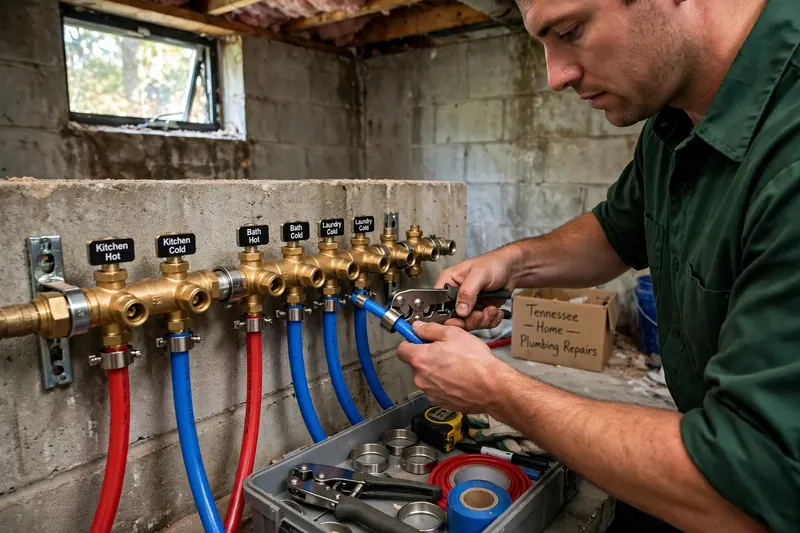
Copper pipe plumbing has been the standard for generations, and sound copper can last decades. PEX, the flexible plastic tubing used in most modern repiping jobs, routes through walls with fewer joints and resists scale and freeze damage differently than metal. PVC plumbing pipe is common for drains, not for supply lines, and it has no place in a potable supply repiping job. The best pipe for plumbing inside a house is usually PEX or copper, and the choice depends on the layout, the water chemistry, and how much wall opening you want to accept. For buried runs, the best pipe for underground water line work is a separate decision, and it depends on soil, depth, and code.
New plumbing pipes change how a house feels. Pressure returns, water runs clear, and the background worry about the next leak goes away. If your house still has poly b pipe, now is the time to have it inspected, because that material is the one most likely to fail without warning. Our Poly-B identification guide shows how to check what you have before you need a repair at 2 a.m.
Q: Does a spot repair weaken the rest of the system?
A: No. A proper spot repair replaces the failed section and pressure-tests the joint. It does not weaken the rest, but it also does not stop the next failure in a system that is failing everywhere.
Water Line Installation, Repair & Replacement
Water Lines: From The Meter To Every Fixture
Underground plumbing runs from the meter to the house, and it lives in the hardest environment in the system: wet soil, clay that swells and shrinks, and roots that find every joint. A water line that leaks underground shows up as a wet yard, a bill that climbs, or a meter that moves with everything off. We locate it, expose the failed section, and replace it with material rated for burial.
New pipe runs are also the answer when a house gains a bathroom, a kitchen moves, or an addition needs supply. A new line gets sized to the demand it will serve, with a shutoff that is reachable and a route that avoids the freeze-prone runs. If the existing line has failed more than once, we will tell you whether a full replacement costs less than another dig.
Hard water is part of the repiping story in Spring Hill. Mineral-heavy water leaves scale on fixtures and inside heaters, and the hard water explained in plain terms article covers how that mineral load gets into the supply in the first place. Repiping does not change your water chemistry, but pairing it with treatment, covered on our water softener and filtration page, protects the new pipe from the same buildup.
Q: How do I know if the leak is in the buried line, not the house?
A: Shut off the house valve and watch the meter. If the meter still moves, the leak is between the meter and the house, in the buried line.
What To Expect
What Repiping Day Looks Like
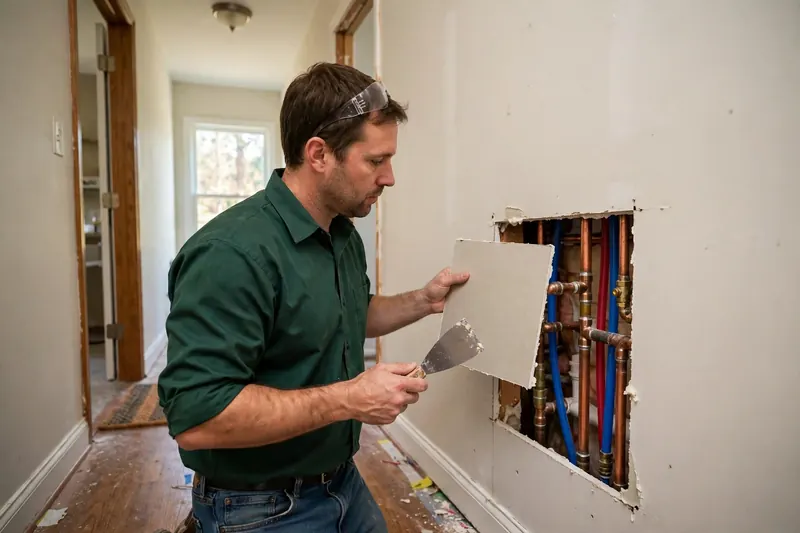
We protect floors and furniture, open small access points, run the new pipe, pressure-test every run, and close up. Water is restored each evening so the house stays livable. Drywall patching follows the pipe work, and the final walkthrough covers every fixture, every valve, and the pressure test results. Our leak detection and repair page covers how we find the failures that justify the job in the first place.
Related Services
More Help For This Problem
Repiping overlaps with leaks, heaters, and remodels. These pages cover the jobs around it.
- Leak detection and repair to find repeat failures
- Water heater repair and replacement after a repiping job
- Bathroom remodel plumbing when walls are already open
- Everyday household plumbing repair for the rest of the house
- Contact Plumber Repair Pro to book a visit
We do repiping work in homes across Spring Hill, including Cherry Grove, on both the Maury and Williamson County sides. See our Poly-B identification guide to check your pipe type.
Questions
Frequently Asked Questions
Three leaks in different places, discolored water, falling pressure, and a repair history that keeps growing all point to repiping. One leak is a repair. A pattern is a system.
Yes. Many homeowners replace the worst runs first and finish the rest later. We plan phases so each one leaves the house fully working.
PEX routes with fewer joints and costs less to install. Copper is rigid and proven. We show you both with the trade-offs for your house.
Fixture count, stories, access, pipe material, and drywall work all play a part. Call for an upfront quote after we see the house.
Most homes take a few days, with water restored each evening. Fixture count, stories, and access set the exact timeline.
Ready When You Are
Tired Of The Next Leak? Replace The System Once.
Call for an inspection. We will show you the pipe material, the condition, and the honest math between one more patch and a full replacement.
Licensed & Insured · Locally Owned & Operated