Plumber in Williamson County, TN
Williamson County's Spring Hill side pairs newer subdivisions with stricter septic rules — permits, soil, and owner care come before the shovel.
Licensed & Insured · Locally Owned & Operated
Mon–Fri 7AM–7PM · Sat 8AM–4PM · 24/7 Emergency
Serving Williamson County
Records first: how a septic job starts here
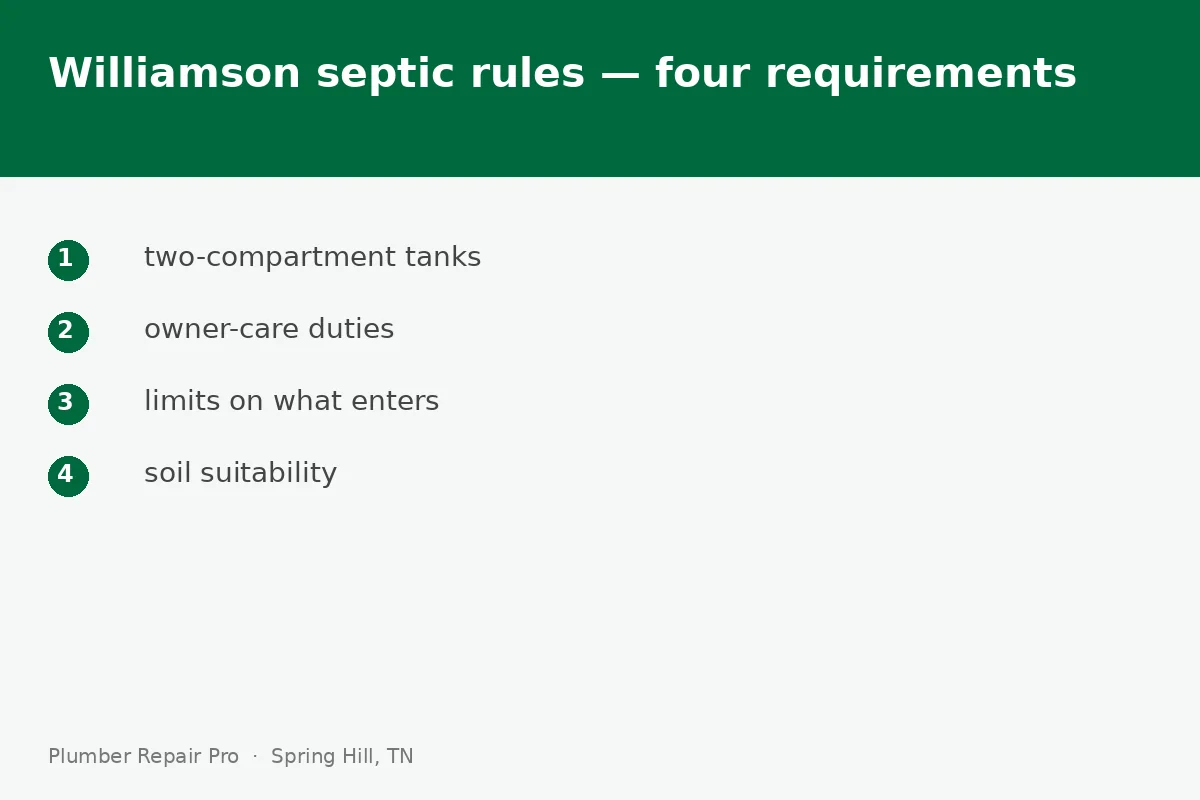
On the Williamson County side of Spring Hill, a septic job starts at a desk, not with a shovel. The county's subsurface sewage disposal rules are detailed: watertight two-compartment tanks, owner-care duties, limits on what may enter the system, and land and soil suitability requirements. The Health Department confirms what your parcel needs — records, soil suitability, and whether a repair permit applies — before any work begins. Starting there avoids work that has to be redone.
That records-first order matters because the county's subdivisions are mostly newer and higher-end — June Lake, Brixworth, Wyngate Estates, Autumn Ridge, Campbell Station, August Park, Copper Ridge, Chapmans Retreat, and Cherry Grove — and many of their parcels sit near the edge of city sewer service. A buyer who assumes city sewer, or a seller who assumes a system is fine, can both be surprised by what the records say.
The county's own offices are the reference for those records. Williamson County's official website lists the departments that hold parcel and permit history, and a call there is the cheapest step in any septic project.
Licensed & Insured · Locally Owned & Operated
Owner care is the daily half of the rules
Because Williamson County septic regulations set owner-care duties and soil requirements, a repair or replacement starts with the county Health Department, not with a shovel. The rules cover the paperwork, but the daily half is yours: the tank's job is settling and digestion, and the field's job is absorption. Everything that goes down the drain either helps those jobs or hurts them.
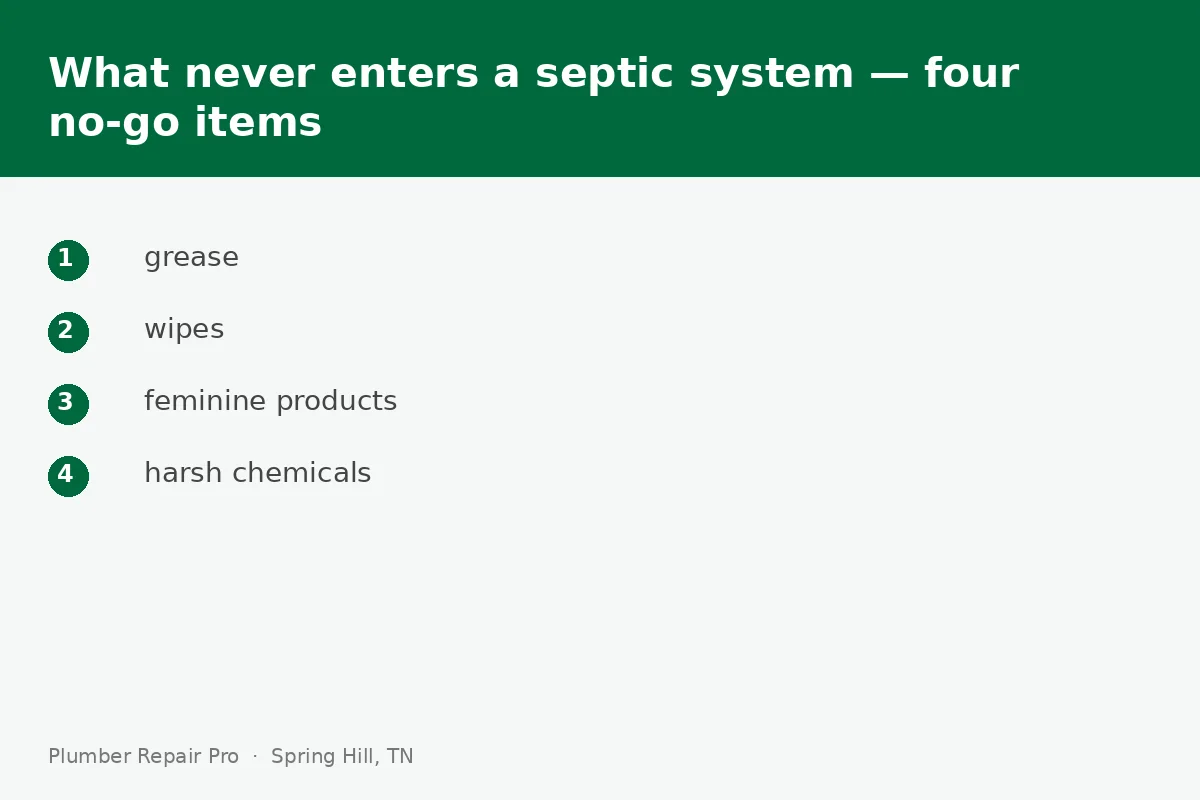
Grease, wipes, feminine products, and harsh chemicals all shorten a system's life. A leaking fixture is worse than any of them, because it overloads the field with continuous flow — a running toilet can push hundreds of gallons a day into soil that was sized for far less. Fixing the leak is septic maintenance, even though it happens inside the house.
Pumping removes sludge; it does not repair a field that has been overloaded for years. A field that stays wet, smells, or grows suspiciously lush grass is signaling trouble, and what happens inside a septic tank explains why the field, not just the tank, decides the system's health. The reserve area — the spare ground set aside for a future field — is part of the system too, and it should never be paved, built on, or driven over.
Licensed & Insured · Locally Owned & Operated
Slope, soil, reserve area — and the irrigation on newer lots
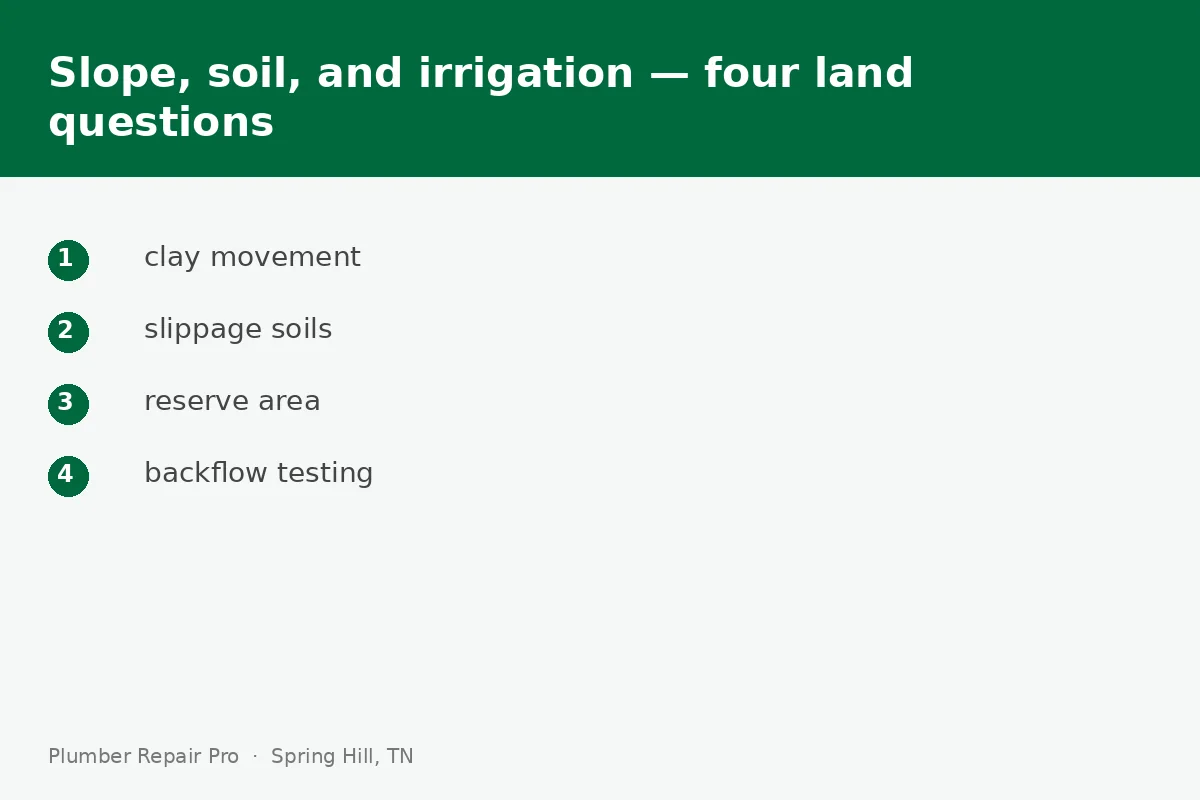
Two soil forces shape Williamson County plumbing. Expansive clay swells when wet and shrinks when dry, stressing buried sewer lines through repeated cycles. Slippage soils and slope rules apply in designated areas, where geotechnical input can be required for septic work on certain slopes. A lot that looks flat from the driveway can still carry a slope designation in the records.
The drain field turns those forces into a land question. A field needs soil that absorbs, a slope that drains without eroding, and a reserve area for the future. Lot size, soil, and reserve area together decide whether a parcel can support a system at all — and whether a repair means a new field in the reserve or a different answer entirely.
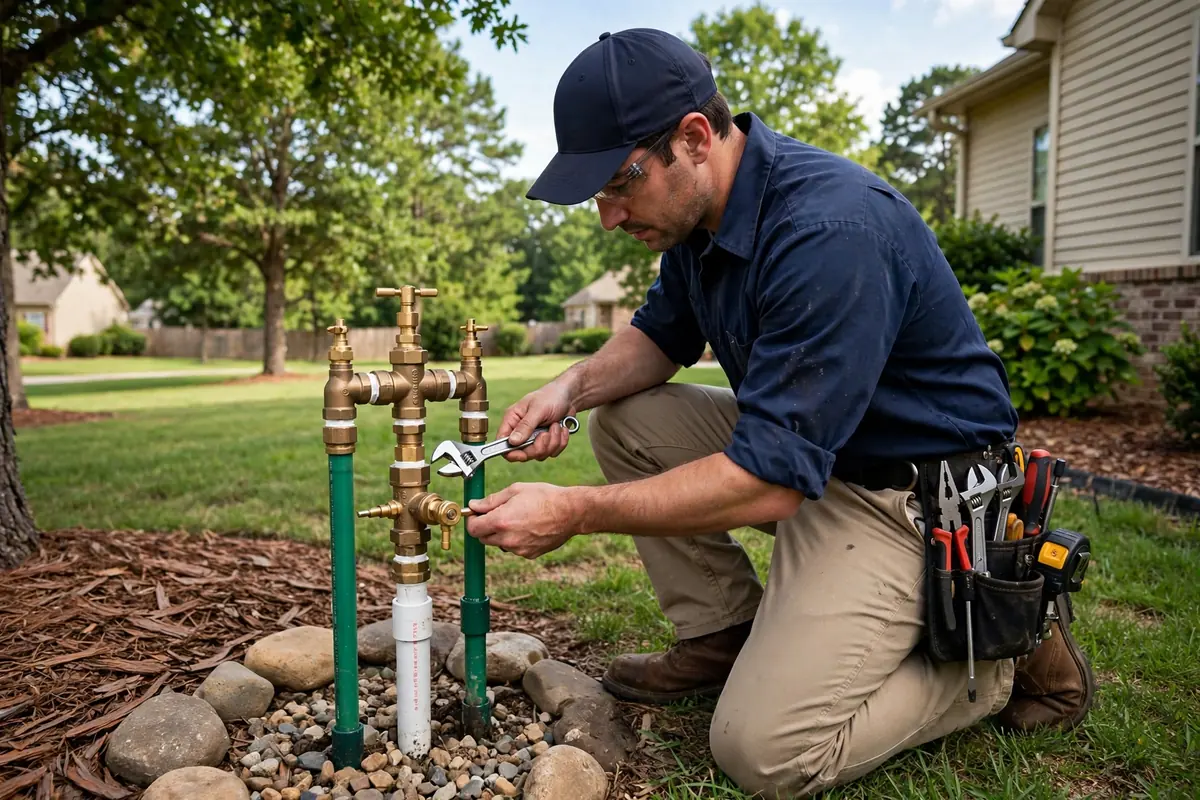
Newer lots add a third system: irrigation. A backflow preventer keeps irrigation water out of the household supply, and it needs a yearly test to keep doing it. A preventer that sticks, leaks, or fails its test is a health device failing, not a lawn accessory — and the fix is a test, a repair, or a replacement, in that order.
For city-sewer homes, the same soil forces apply to the lateral, and the same winter rule applies to the whole house: disconnect hoses, drain spigot lines, insulate exposed runs, and test the main shutoff before the first freeze. Clay, karst, hard water, and freeze nights do not respect the county line — but the septic paperwork does.
- Start septic work with the county Health Department and parcel records.
- Keep grease, wipes, and harsh chemicals out of any septic system.
- Never pave, build on, or drive over the reserve area.
- Test the irrigation backflow preventer every year.
Licensed & Insured · Locally Owned & Operated
Find Williamson County on the Map
Williamson County's Spring Hill side covers the newer and higher-end subdivisions north and east of the county line, plus the June Lake area by the I-65 interchange. The county seat is Franklin, and the county's septic rules are stricter than its neighbor's.
Plumbing Help for Williamson County Homes
Emergency Plumbing
Round-the-clock help for bursts, backups, and no-water calls.
Water Heater Service
Tank and tankless service, install, and replacement.
Drain Cleaning & Hydro Jetting
Clearing slow drains and full-pipe cleaning with camera checks.
Sewer Line Repair
Camera checks, clearing, and repair for sewer lines.
Leak Detection & Repair
Finding hidden water leaks without opening every wall.
Neighborhoods in Williamson County
Plumber in June Lake
Plumbing for June Lake homes →
Plumber in Brixworth
Plumbing for Brixworth homes →
Plumber in Wyngate Estates
Plumbing for Wyngate Estates homes →
Plumber in Autumn Ridge
Plumbing for Autumn Ridge homes →
Plumber in Campbell Station
Plumbing for Campbell Station homes →
Plumber in August Park
Plumbing for August Park homes →
Plumber in Copper Ridge
Plumbing for Copper Ridge homes →
Plumber in Chapmans Retreat
Plumbing for Chapmans Retreat homes →
Plumber in Cherry Grove
Plumbing for Cherry Grove homes →
Williamson County plumbing, permits first, then pipework
Septic rules, soil, and slope come before the shovel. Tell us your address and we will start with the records.
Mon–Fri: 7AM – 7PM · Sat: 8AM – 4PM · 24/7 Emergency Service
Licensed & Insured · Locally Owned & Operated