Find It Before Opening The Floor
Leak Detection & Repair in Spring Hill, TN
A hidden leak announces itself with a bill, a sound, or a warm spot, long before it shows as water. We pinpoint the source with non-invasive tools, so the floor opens in one place, not five.
Licensed & Insured · Locally Owned & Operated
Mon–Fri 7AM–7PM · Sat 8AM–4PM · 24/7 Emergency
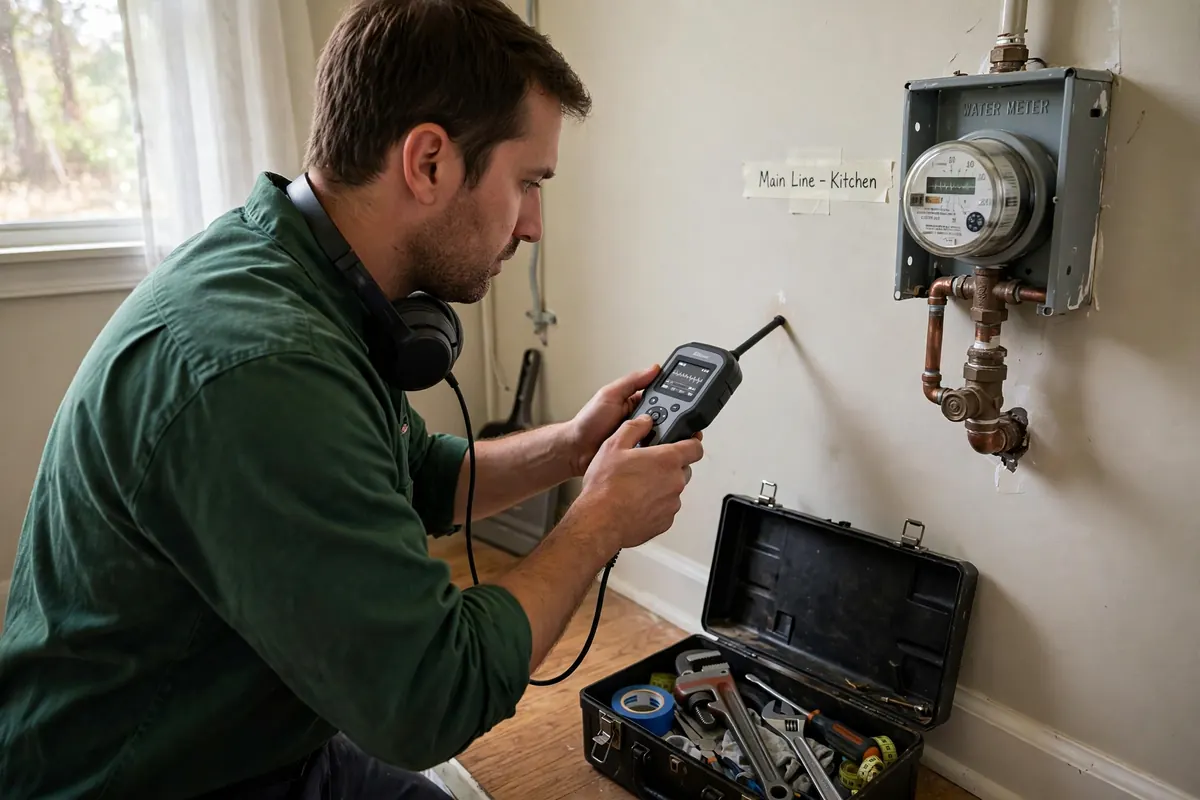
Find The Leak Before Opening The Floor
The Five-Clue Pattern Of A Hidden Leak
Hidden water leak signs follow a pattern: a water bill that climbs with no change in use, the sound of running water with every fixture off, a warm spot on the floor, damp or warped flooring, and a musty odor near baseboards. One clue is a hint. Two or more is a leak, and the sooner it is found, the smaller the repair.
A leak detection specialist does not start by opening walls. Detection starts with a meter test, then acoustic listening, thermal imaging, and pressure testing to narrow the source to a small area. That order is what keeps a hidden leak from becoming a demolition project.
Leak Detection & Repair
How We Pinpoint A Leak Without Tearing Up Floors
Plumbing leak detection starts with the water meter leak test. With every fixture off, we watch the meter. If it moves, water is going somewhere it should not. That single test separates a real leak from a billing question, and it is a test you can describe to us on the phone before we arrive.
From there, acoustic detection listens for the hiss of water escaping under pressure, thermal imaging looks for the warm signature of a hot-side leak, and pressure testing isolates one run at a time. Our plumbers bring all three tools on every detection visit, because no single tool tells the whole story. A hidden leak can sit in a wall, under a slab, or in a crawl space, and each location needs a different tool. A leak specialist reads the pattern across all three, rather than trusting any single one.
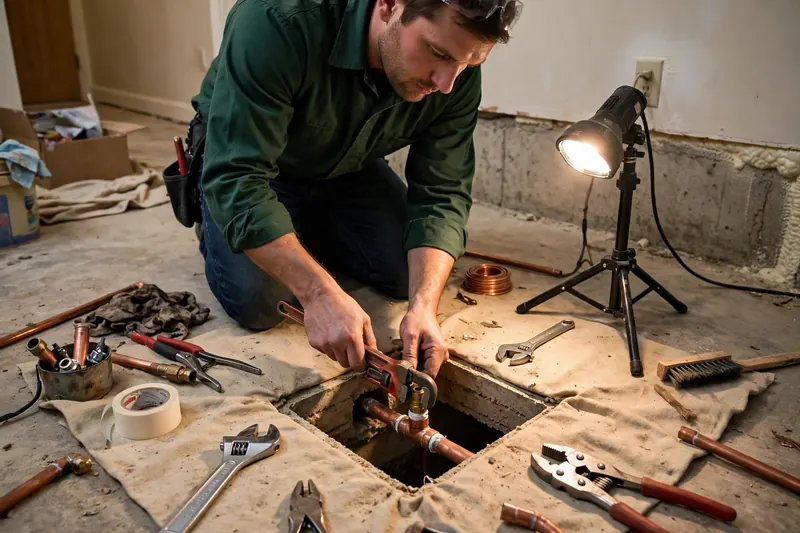
Leak repair follows the same discipline: open the smallest area that reaches the failure, repair the section, pressure-test the fix, and close up. A leaking pipe in a wall usually needs a short section replaced, not a whole run. If the line has failed in several places, we will tell you whether a spot repair or a larger fix makes sense, and our whole-house repiping page explains that decision.
One common confusion is worth clearing up. A sweating copper pipe is condensation, not a leak. Cold water in a humid crawl space or basement sweats on the outside of the pipe, drips, and looks exactly like a pinhole leak. The test is simple: dry the pipe, watch whether moisture returns evenly across the surface, and check whether the meter moves. Condensation returns as a fine film. A leak returns as a bead or a stream from one point. If you are unsure, call us and we will test it rather than guess.
Two fixture leaks deserve a specific mention. A shower pipe leaking inside a wall shows up as damp drywall or a stain on the ceiling below, and a toilet pipe leaking at the base shows up as a soft floor or a sewer odor. Both need a prompt look, because both soak the structure quietly. For the EPA side of finding household leaks, the EPA leak-detective guidance covers the same meter-test idea we use on every call.
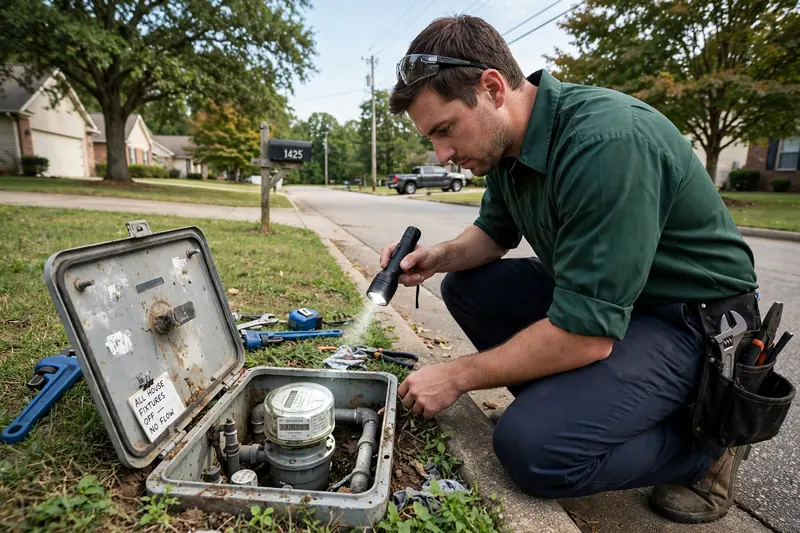
Q: Why does my meter move when everything is off?
A: Because water is going somewhere it should not. A meter that moves with every fixture off means a leak, and that test is what separates a real leak from a billing question before we ever open a wall.
Slab Leak Detection & Repair
Slab Leaks: Hot Spots, Cold Spots, And Erosion Under The Floor
Slab leak symptoms are distinct: a warm spot on the floor that never cools, the sound of running water under the slab, a water heater that runs more than it should, a bill that jumps, and, in later stages, a crack or a damp patch that keeps returning. A hot-side slab leak warms the floor above it. A cold-side slab leak shows up more as pressure loss and bill rise, with no warm spot to point at.
Under-slab erosion is the long-term worry that pushes people to act. Water escaping under pressure washes soil away from under the slab, and over time that can stress the floor and the foundation. Finding the leak early is not just about the water bill. It is about the soil under the house.
Detection under a slab uses the same tools, with more care. Acoustic listening narrows the spot, thermal imaging maps the hot-side signature, and pressure testing confirms which run is losing water. A pipe burst in house walls is the fast version of the same problem, and it needs the emergency response on our burst pipe page, not a scheduled detection visit. Repair options for a slow slab leak depend on the pipe, the soil, and the access: a direct repair through a small slab opening, a reroute overhead or through walls that abandons the buried run, or, when the system has failed repeatedly, a full repiping job. If the failure is a burst rather than a slow leak, our burst pipe repair section covers the first-10-minutes sequence.
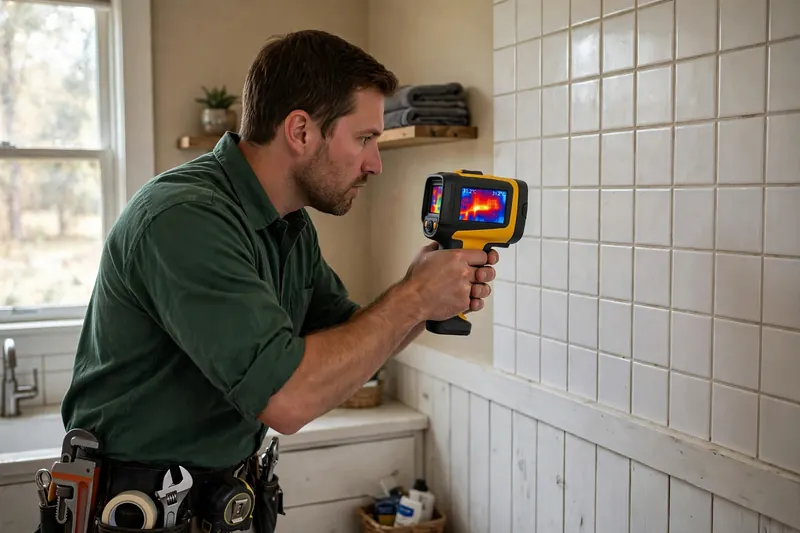
Q: Is a warm floor always a slab leak?
A: No. A warm floor can come from a heating run, a sun-warmed slab, or a hot water line that passes nearby. A meter test plus acoustic and thermal checks confirm whether it is a leak before anyone opens the floor.
When To Act
When A Leak Is An Emergency
Call now when water is active and spreading, when the meter spins fast with everything off, or when a ceiling is sagging under water weight. Book a prompt visit when the meter creeps, when a warm spot appears, or when a bill jumps with no change in use. Either way, do not wait for the leak to announce itself a second time. Our emergency plumbing page covers the after-hours path, and our everyday household plumbing repair page covers the small visible leaks that detection does not need.
Related Services
More Help For This Problem
Leaks connect to bursts, repiping jobs, and water heaters. These pages cover the next step after detection.
- Emergency plumbing when water is spreading now
- Whole-house repiping when leaks keep repeating
- Water heater repair for tank and relief valve leaks
- Everyday household plumbing repair for visible leaks
- Contact Plumber Repair Pro to book a visit
We detect leaks across Spring Hill, including Southern Springs, on both the Maury and Williamson County sides. See our first 10 minutes of a plumbing emergency guide for what to do while you wait.
Questions
Frequently Asked Questions
Watch the meter with everything off, listen for running water at night, and look for warm spots, damp flooring, or a musty smell near baseboards. Two or more signs together point to a leak.
Access, the tools needed, and whether the leak is in a wall, a slab, or a crawl space all play a part. Call for an upfront quote before we start, and ask what the detection visit includes.
Acoustic listening, thermal imaging, and pressure testing narrow the source to a small area first. We open the smallest area that reaches the failure, not a series of exploratory holes.
Over time, yes. Water escaping under pressure washes soil away from under the slab, and that can stress the floor and the foundation. Finding the leak early is about the soil as much as the bill.
Access to the failed fitting, the extent of the water damage, and whether a section or a full run needs replacement all play a part. Call for an upfront quote after we see the leak.
Ready When You Are
Bill Climbing? Warm Spot? Let Us Pinpoint It.
Describe the clues on the phone and we will bring the right tools. No exploratory demolition, no guessing.
Licensed & Insured · Locally Owned & Operated