Plumber in Cherry Grove, Spring Hill TN
Cherry Grove is an established area with homes from several phases — the telling first step is knowing your pipework, not assuming it.
Licensed & Insured · Locally Owned & Operated
Mon–Fri 7AM–7PM · Sat 8AM–4PM · 24/7 Emergency
Serving This Area
Know your pipework before you need to
This is an established area, and the most telling plumbing fact about any established home is also the least known: what the supply pipes are made of. We do not assume any home here has a specific pipework — the area has homes from the mid-2000s through recent phases, and pipework varies by phase, builder, and remodel. The honest step is a short pipework check, not a local guess.
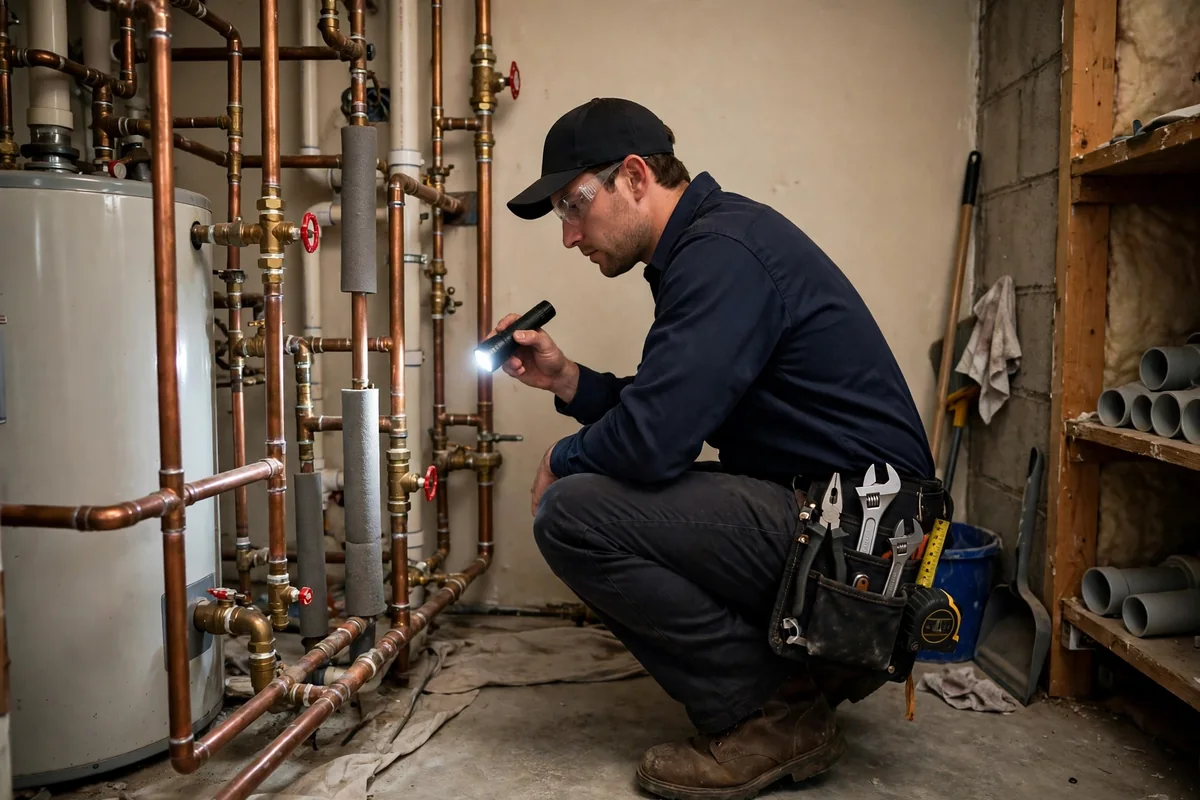
The check looks at visible runs: near the water heater, at the meter, at shutoffs, and in the crawl space. Old supply pipe from an earlier era, galvanized steel, copper, and flexible plastic pipe each look and feel different, and each carries a different plan. How household pipework changed over time is a helpful background read before your check.
Why does it matter? Because the material decides the discussion. Galvanized lines narrow from the inside and show up as falling pressure. That plastic can fail at joints with little warning, which is why a confirmed result leads to a replacement discussion rather than another patch. Copper and the flexible line shift the discussion to fixtures, heaters, and drains instead.
Licensed & Insured · Locally Owned & Operated
Plastic line, copper, or PEX: how to tell
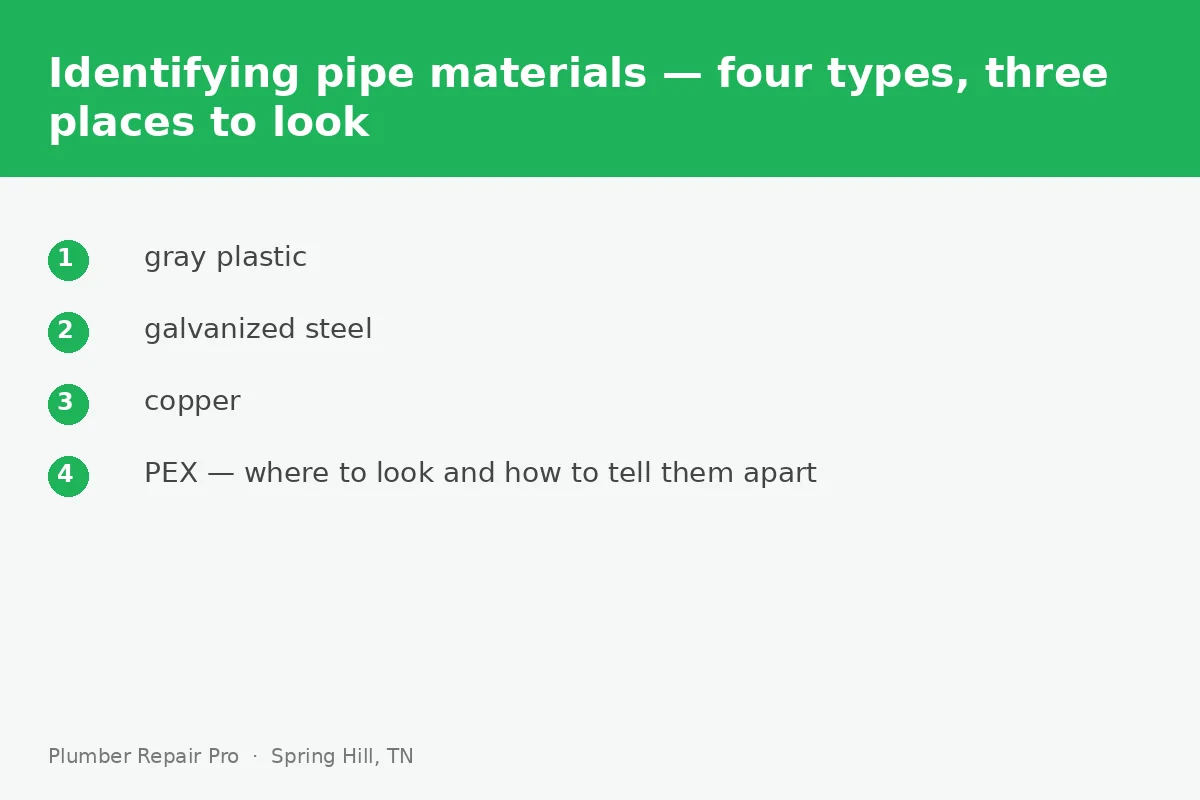
Reading pipework takes eyes and a magnet, not a demolition crew. The gray supply line is dull gray, bendable, and joined with polymer or brass fittings that can look brittle. The coated line is the same color, but it is magnetic, rigid, and threaded at joints. The metal line is reddish-brown where it is exposed and takes soldered joints. Cross-linked tubing comes in red, blue, or white, with crimp or clamp fittings.
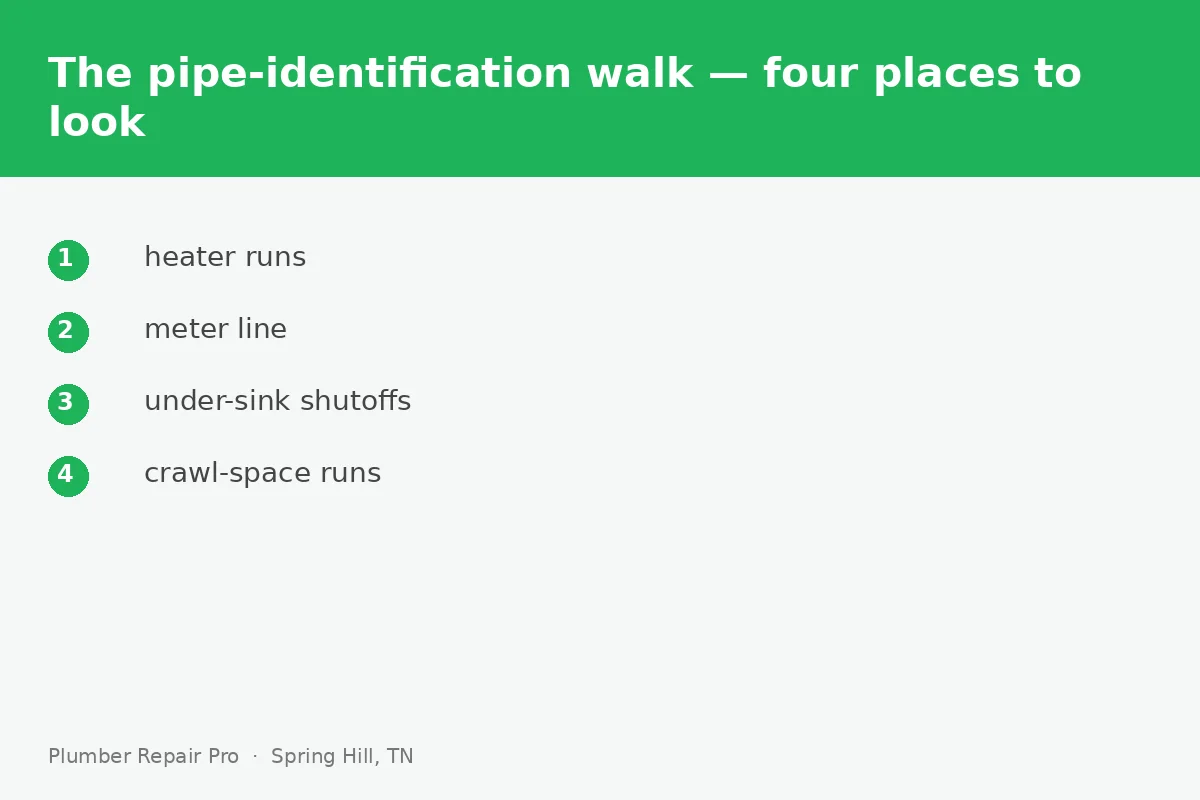
The spots to look are the same in every home: the runs into and out of the water heater, the line at the meter, the shutoffs under sinks, and any exposed run in a crawl space or utility room. Photograph what you find — a photo of a fitting is worth more than a description when you call for advice.
One caution: a home can mix materials, especially after a remodel or a partial repair. Seeing copper at the heater does not prove the whole house is copper. A full check looks at several spots before concluding anything.
Licensed & Insured · Locally Owned & Operated
Heaters, laterals, and the inspection that settles it
Beyond pipework, the established-home inspection here covers the heater, the lateral, and the shutoffs. Heaters in older phases are often mid-life or older: sediment, slow recovery, and discolored water in the first seconds of a hot tap all point to a heater nearing the end of its reliable years. A tank that leaks from its shell has no repair.
The sewer lateral gets a camera check, not a guess. Tree-lined lots and clay soil both stress buried lines, and a camera shows roots, bellies, and breaks in plain view. A line that clears and then slows again in the same spot is telling you the cause is still in the line.
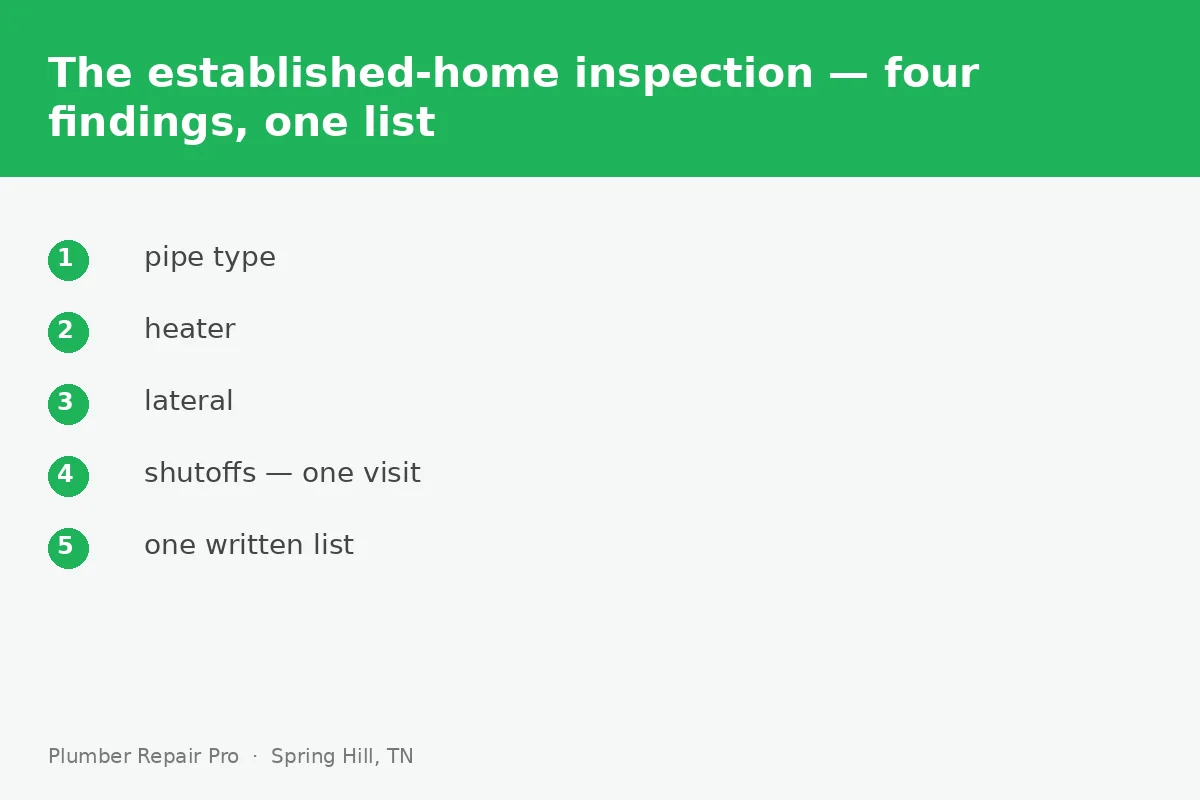
The whole inspection takes a single visit and ends with a written list: pipework, heater condition, lateral condition, and shutoffs that work. From there, the decisions are straightforward — repair, plan, or replace — and each one rests on something seen, not something assumed.
- Identify pipework at several spots, not just one.
- Check heater age, sediment, and recovery.
- Camera-check the lateral when drains slow twice in the same spot.
- Test every shutoff, including the main, once a year.
Licensed & Insured · Locally Owned & Operated
Find This Area on the Map
This is an established subdivision on the Williamson County side of Spring Hill, with a community pool, clubhouse, walking trails, and a creek-side setting. Listings show homes from the early phases through recent ones.
View Cherry Grove on Google Maps
Plumbing Help for Homes Here
Whole-House Repiping
Whole-home pipe replacement, planned around your house.
Sewer Line Repair
Camera checks, clearing, and repair for sewer lines.
Leak Detection & Repair
Finding hidden water leaks without opening every wall.
See the full list on our Spring Hill neighborhoods page, or read about plumbing across Williamson County. When you are ready, reach our team here.
Your plumbing, settled by inspection
Do not guess your pipework — check it. Book a pipework check, a camera inspection, or a whole-home visit.
Mon–Fri: 7AM – 7PM · Sat: 8AM – 4PM · 24/7 Emergency Service
Licensed & Insured · Locally Owned & Operated