Residential Plumbing Repair in Spring Hill, TN
Start with the symptom. A drip, a slow drain, a running toilet, or a pressure drop each points to a different fix, and this page is the triage hub for all of them.
Licensed & Insured · Locally Owned & Operated
Mon–Fri 7AM–7PM · Sat 8AM–4PM · 24/7 Emergency
Everyday Household Plumbing
Plumbing Installation, Repair & Replacement
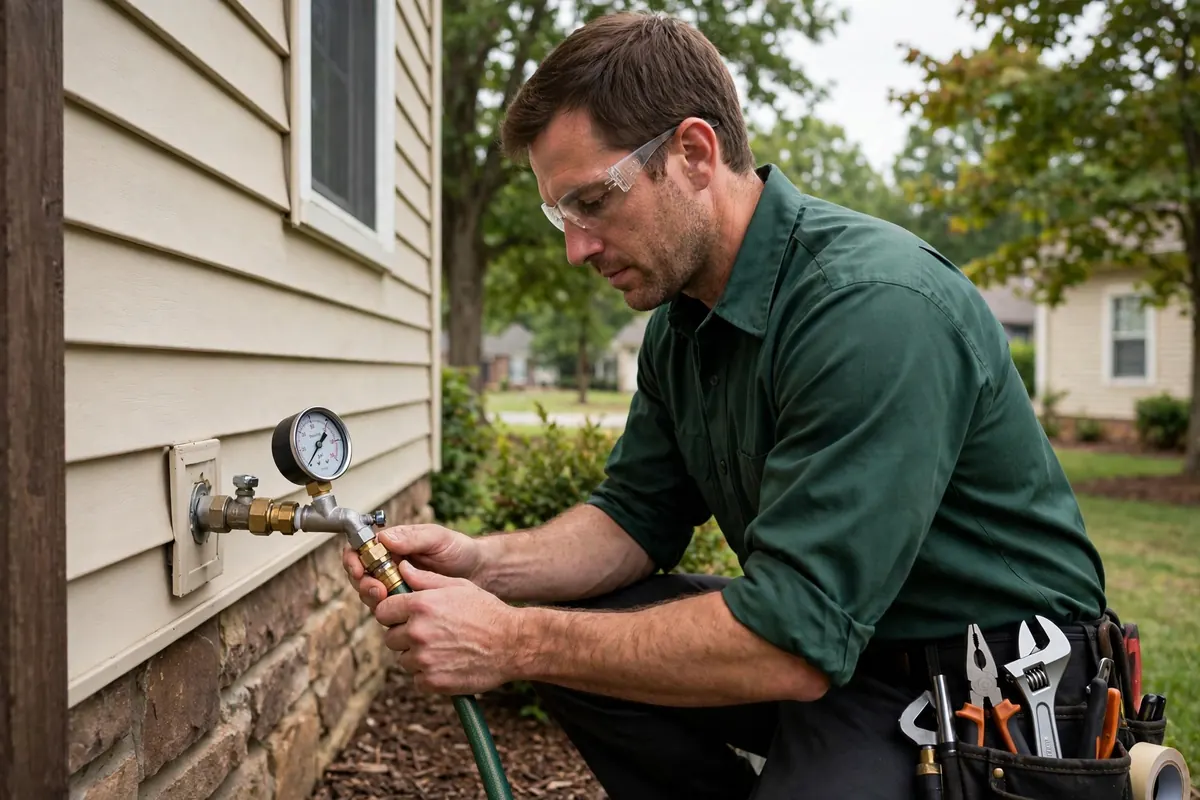
This page covers household plumbing for Spring Hill homes: installs, repairs, and replacements across the whole house. If you need household repairs, start with the symptom, not the system name. Our household services cover the everyday jobs below, from a dripping faucet to a house-wide pressure problem.
Homeowners often describe the same job as home plumbing, and the fix is the same whether you call it that or use the formal name. A visit that bundles household fixes can clear several small jobs in one trip, which is usually the cheapest way to clear a mixed list. We treat plumbing services as one connected system: a drip, a slow drain, and a pressure drop can share one cause, and fixing the cause beats fixing each symptom separately.
People searching for a local crew usually want one that answers the phone and shows up when promised. For plumbing repair near me, the fastest path is a symptom: tell us what you see, hear, or smell, and we will tell you whether it can wait. Our plumbing repair services range from a single cartridge swap to a full fixture replacement, and our Spring Hill home base page links to every service we offer.
Direct answer: most household calls fit one of four buckets: a drip, a drain, a toilet, or pressure. Name the bucket when you call, and we will bring the right parts the first time.
How to Compare Plumbers
A general plumber handles the mixed list in one visit: faucets, toilets, shutoffs, supply lines, and drains. A professional plumber explains the cause before the repair, and shows you the failed part when possible. Homeowners looking for professional plumbers near me usually weigh the same three things: clear pricing, a clean job, and a repair that holds.
Quality plumbing is quiet plumbing: no drips, no hammering, no slow drains. Reliable plumbing means the repair still holds months later, not just on the day we leave. If you are trying to find a plumber for a mixed list of small jobs, one visit can cover several of them. When you need a plumber at 7 a.m. on a Saturday, the question is who answers and what the after-hours path looks like.
When you search for a local plumber near me, you are really asking who will answer, show up, and stand behind the work. Local plumbers see the same patterns across Spring Hill: hard-water scale, builder-grade valves, and crawl-space runs. Among local plumbing companies, the useful comparison is scope in writing, not a headline price. Plumbers in my area get the same first question: can you come today? Plumbing companies near me and plumbing contractors near me overlap heavily; the difference is usually the size of job they take on.
Reputable plumbers near me earn that word one visit at a time, through written estimates and clean work. Residential plumbers near me handle homes, not storefronts; business work lives on our plumbing for businesses page. Good plumbers near me are the ones who tell you when a repair is not worth doing.
Ask whether you are hiring a licensed plumber, and what licensed and insured means for your job. Many people search for licensed plumbers near me before they call; ask what licensing applies to your work and who will actually do it. The same applies to certified plumbers near me: ask what the certification covers, and who holds it.
If you search for the best plumbers near me, compare written scopes, response times, and how the company handles a repair that fails, not a star count nobody can verify for you. The same test applies to best rated plumbers near me and top rated plumbers near me: read recent reviews for patterns, and ask how estimates are written. For the best round-the-clock help near you, the question is who answers at night and what the after-hours path looks like; our emergency page explains it.
Cheap plumbers near me is a search we answer with transparency: an upfront quote before work starts, so you can compare scope, not just price. Cheap quotes usually mean a small job done at a fair, written price, not the lowest number anyone will say on the phone.
What a Repair Costs
Affordable plumbers near me is a search with a trap: the lowest quote can be the most expensive repair if it skips the real cause. Affordable plumbing, in our view, means transparent pricing and the smallest repair that actually fixes the cause. Hourly pricing comes up often; we quote by job scope, so call for an upfront quote for your repair. Plumber prices vary with access, parts, and scope; call for an upfront quote before work starts. Plumbing repair cost depends on the same factors; a written quote beats a phone guess.
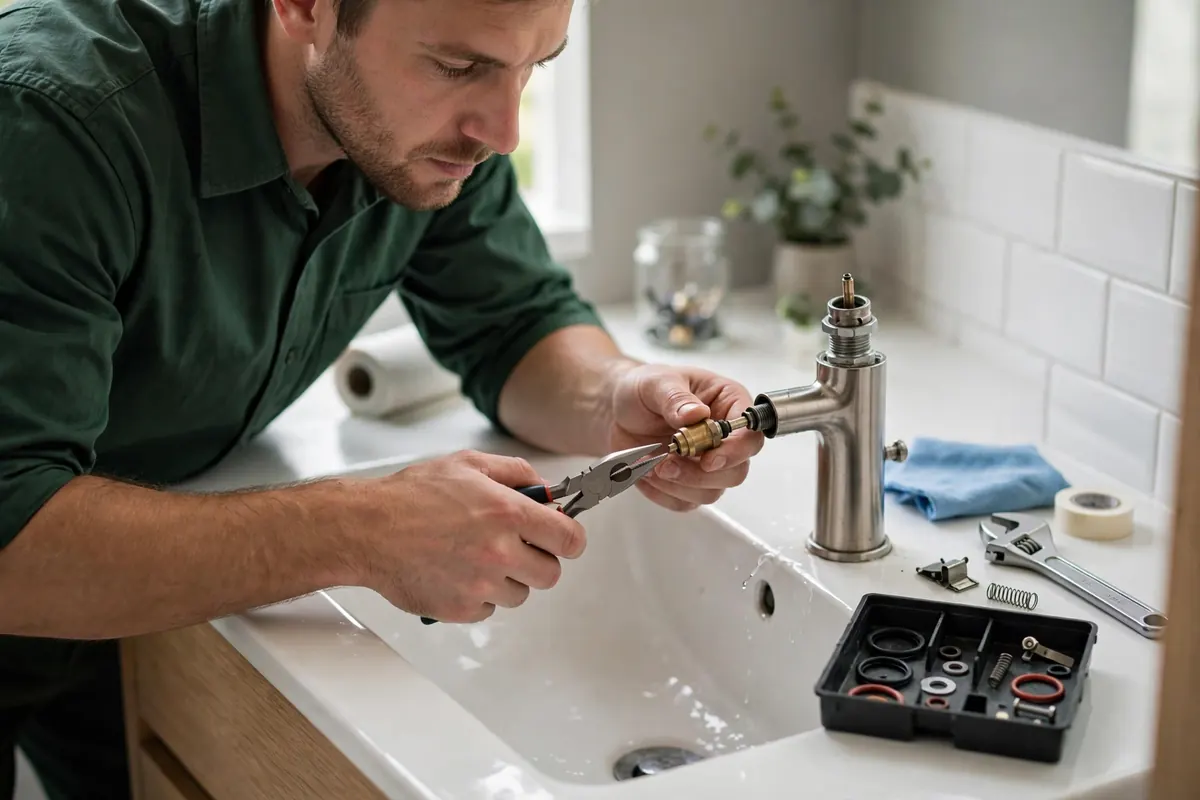
To fix leaky faucet calls, we usually start with the cartridge or the shutoff, not the whole fixture. A drip that seems small can waste water for months, stain the sink, and hide a failing shutoff underneath. A general plumbing overview explains how these parts fit together if you want the background.
Licensed & Insured · Locally Owned & Operated
Plumbing Inspection
An inspection is a top-to-bottom look at your system before you buy, remodel, or commit to a big repair. We check shutoffs, supply lines, drains, the water heater, and visible piping, then hand you a plain-language list: what is fine, what is wearing, and what needs attention now. A plumbing inspection before buying a house checks shutoffs, supply lines, drains, and the water heater before you sign, and it is the cheapest way to learn whether a home hides a repair bill.
Inspections also settle the repair-versus-replace question. One leak in one place is a repair. Leaks in different places, rusty water, and falling pressure together point to a system, and the inspection is where that pattern shows up. If the inspection finds a hidden leak, our leak detection page covers how we pinpoint it without opening floors to look.
Licensed & Insured · Locally Owned & Operated
Plumbing Maintenance
Maintenance is the scheduled version of the same idea: catch small leaks and wear early, before they become cabinet, floor, or ceiling damage. A maintenance visit checks the spots that fail quietly: under-sink connections, toilet fill valves, shutoffs that have not moved in years, water pressure, and visible piping. Hard-water scale is the background cause across many small repairs, so aerators, cartridges, and valves get a look too.
Our maintenance plan page covers the full visit checklist, the water-heater service, and the written report you get afterward. If you would rather handle the basics yourself, the DIY-safe list is short: clean an aerator, swap a flapper, plunge a single slow drain. Everything past that, including a shutoff that will not close, is a call, not a project.
Licensed & Insured · Locally Owned & Operated
Water Pressure Repair
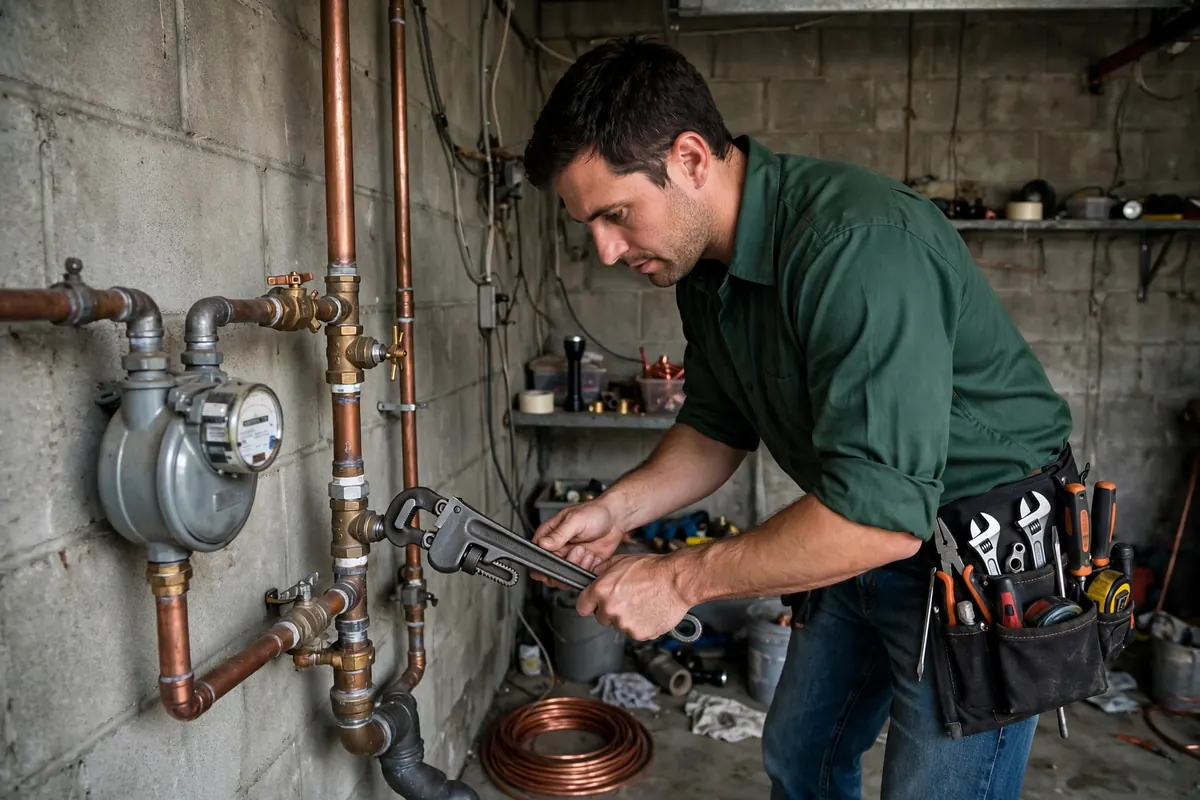
Whole-house pressure that fell off a cliff usually means buildup, a failing regulator, or a supply problem, not one bad faucet. Low water pressure in house calls usually trace to one of four causes: a failing pressure regulator, mineral buildup in pipes or fixtures, a partly closed valve, or a supply-line problem. We test in order, starting at the main, so a single clogged aerator does not get sold as a house-wide repair.
Pressure that surges is a different problem from pressure that fades. Surging, hammering pipes, and a relief valve that drips point to the regulator or the expansion tank. Fading pressure that gets worse over months points to buildup or a supply restriction. Tell us which one you have when you call, and we will bring the right test first.
Licensed & Insured · Locally Owned & Operated
Pressure Regulator Installation, Repair & Replacement
The regulator holds house pressure in a safe range. When it fails, you get surging pressure, hammering pipes, or a slow loss of flow. A regulator that sticks open lets street pressure into the house, which stresses every fixture, supply line, and appliance valve downstream. One that sticks closed starves the house until someone finds it.
Replacement starts with a pressure reading, not a guess. We measure static pressure, check the expansion tank, and look for the signs of overpressure: dripping relief valves, leaking supply lines, and fixtures that fail early. If the regulator is the cause, a new one plus a pressure check is the whole job. If it is not, we say so and test the next suspect instead.
Licensed & Insured · Locally Owned & Operated
Outdoor Plumbing
Everything past the exterior wall takes the worst of Middle Tennessee weather: yard hydrants, exterior lines, and the fixtures that freeze first. Outdoor work splits into three jobs with different failure modes: the faucet itself, the hose bib, and the irrigation supply. The shared habit that protects all three is fall preparation. To winterize outdoor faucets, disconnect hoses, drain the line, and shut off the interior valve before the first freeze.
A hose left on an outdoor spigot through a cold snap is the classic burst cause: water trapped in the line freezes, expands, and splits the pipe inside the wall. The leak shows up in spring as a damp wall or a bill that jumps. If you forgot to disconnect, tell us, and we will check the line before it becomes a wall repair.
Licensed & Insured · Locally Owned & Operated
Outdoor Faucet Installation, Repair & Replacement
An outdoor faucet drips, splits, or seizes for the same reasons indoor ones fail, plus one extra: freeze. A dripping outdoor faucet wastes water all season and can feed a burst inside the wall. We repair or replace the faucet and its shutoff together, because a new faucet on a failed shutoff is a repeat visit waiting to happen.
Frost-proof models help, but they are not freeze-proof. A frost-proof faucet still needs the hose disconnected and the line drained. If your outdoor faucet will not turn, will not stop dripping, or sprays from the handle, shut off its interior valve and call us rather than forcing it.
Licensed & Insured · Locally Owned & Operated
Hose Bib Installation, Repair & Replacement
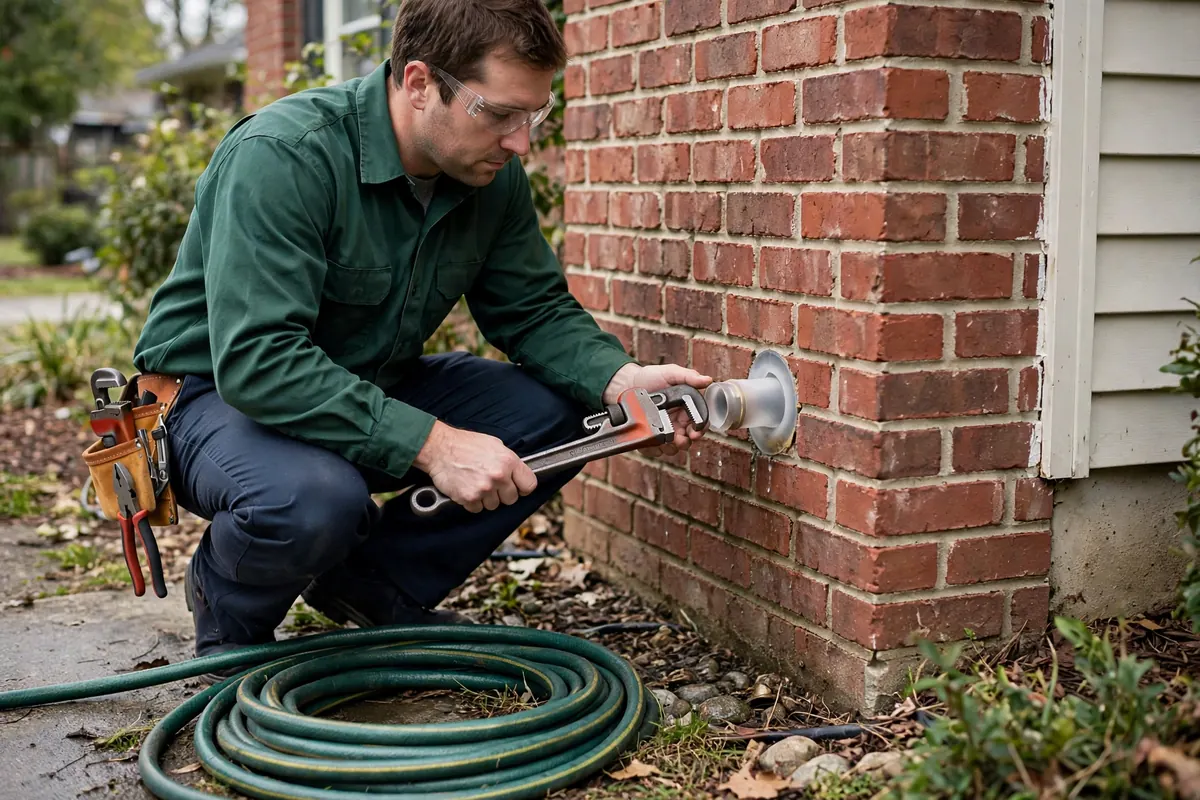
Hose bibs freeze, seize, and leak at the stem. The stem packing wears, the handle binds, and the vacuum breaker, if one is fitted, starts to drip. A hose bib that leaks at the stem usually needs packing or a new bib, and the choice depends on the condition of the pipe behind it.
When we replace a hose bib, we check the interior shutoff and the line back to the house at the same time. A bib that froze once has often stressed the pipe behind it, and a spring leak from that stress is easier to catch now than after the wall is closed. Frost-proof models and a disconnected hose in fall prevent most of it.
Licensed & Insured · Locally Owned & Operated
Irrigation Plumbing
Irrigation work is the plumbing side of a lawn system: supply lines, valves, and the backflow protection that keeps lawn water out of the drinking supply. A lawn system is a cross-connection, which is why a backflow assembly is part of the job, not an extra. Our backflow page covers the Spring Hill testing and permit path in full.
Winterization matters as much as the install. An irrigation line that holds water through a freeze can split in several places at once, and the damage shows up as a soggy lawn in spring. We shut down, drain, and isolate the system before the first freeze, and we check the valves and heads when it goes back into service. If a zone loses pressure or a head will not shut off, the valve, not the head, is usually the cause.
Licensed & Insured · Locally Owned & Operated
Related: maintenance plan, water heater repair, leak detection and repair, emergency plumbing, contact us.
Household Plumbing Questions
Safe DIY jobs are small and reversible: cleaning an aerator, swapping a toilet flapper, and plunging a single slow drain. Call a pro for a shutoff that will not close, a leak at a base or inside a wall, anything gas, and anything sewer.
Access, parts, scope, and timing drive the quote. A cartridge swap behind an open vanity costs less in labor than the same swap behind a seized shutoff. Call for an upfront quote before work starts, and compare scopes, not just numbers.
The usual causes are a running toilet, a hidden leak, or a softener or irrigation line cycling when it should not. Check toilets first with a dye test, then look under sinks and around the water heater for dampness.
Look where the water line enters the house, often in the garage, utility room, or crawl-space wall, and at the meter box near the street. Find it before an emergency, and test it once so you know it closes.
Call right away for active leaks, sewage backups, no water, a burst pipe, or any gas smell. For a drip, a slow drain, or a running toilet, you can wait a day, but do not wait a month. Small leaks become cabinet, floor, and ceiling damage.
Ready When You Are
Tell Us the Symptom. We Will Take It From There.
Call now with what you see, hear, or smell. Mon–Fri 7AM–7PM, Sat 8AM–4PM, 24/7 for emergencies.
Licensed & Insured · Locally Owned & Operated