Safety First, Always
Gas Line Plumbing in Spring Hill, TN
Smell gas? Leave first, call second. Do not hunt for the leak, do not flip switches, do not start a car in the garage. This page covers the safety steps, then the hookups and extensions.
Licensed & Insured · Locally Owned & Operated
Mon–Fri 7AM–7PM · Sat 8AM–4PM · 24/7 Emergency
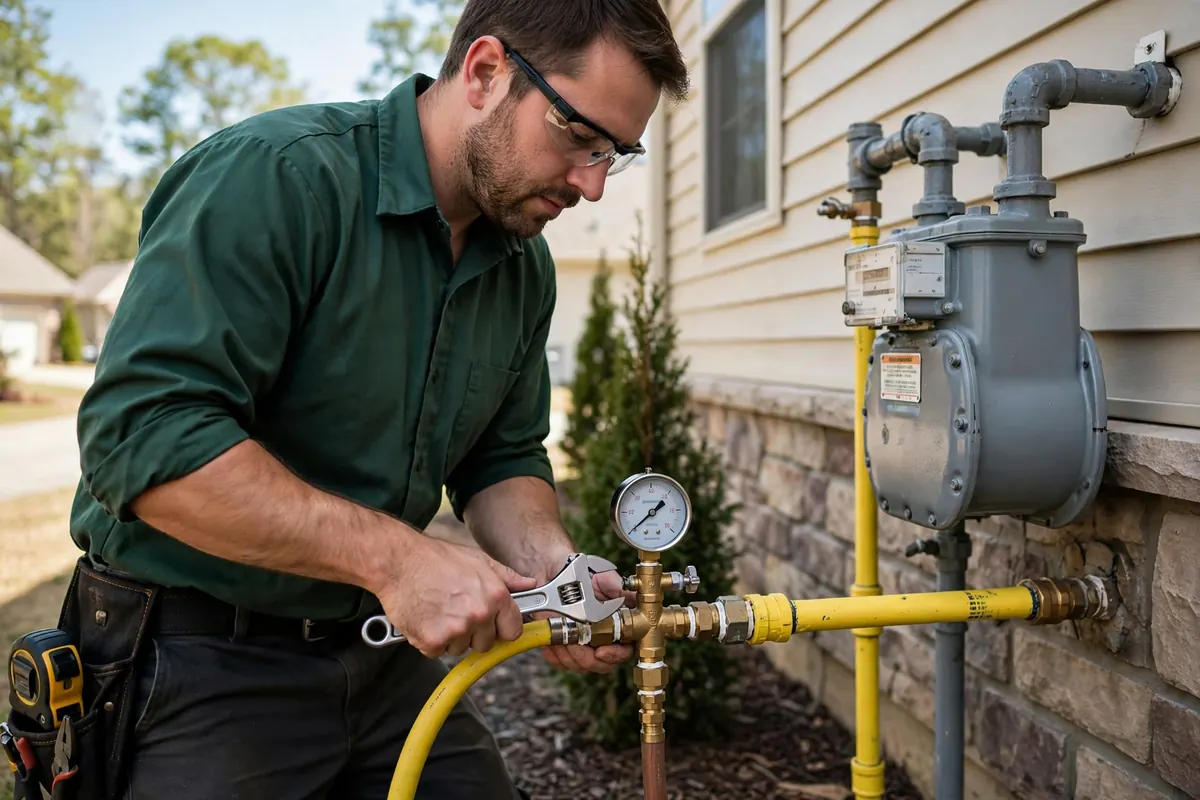
Smell Gas? Leave First, Call Second
The Safety Page Comes First On Purpose
Gas work is different from every other plumbing job, because the failure mode is not a wet floor. It is a fire or an explosion. That is why this page leads with safety, not with services. If you smell the rotten-egg odor of the odorant added to natural gas, or hear hissing near a line or appliance, leave the house, get everyone out, and call 911 and your gas utility from a safe distance. Do not flip a light switch, do not use a phone inside the house, and do not go back in to look for the source.
Once the immediate danger is handled and the utility has cleared the property, Plumber Repair Pro in Spring Hill can help with the repair, the pressure test, and the permit path. Gas and plumbing work meets in this trade, because the same company that runs your water lines often runs your gas lines too, and the same care applies to both.
Gas Line Installation, Repair & Replacement
Hookups, Extensions, Repairs, And Pressure Tests
Plumbing and gas meet at the appliances: ranges, water heaters, furnaces, dryers, outdoor grills, and fire pits all need a gas line sized to their demand, a reachable shutoff, and a tight connection. A gas tech sizes the line to the total load, not just the one appliance, because a line that feeds a range today may need to feed a water heater tomorrow. Gas line installation for stove work is the most common hookup we do, and it starts with checking the existing line size before anyone moves the appliance.
Gas line leak symptoms are worth knowing even though you should never hunt for a leak yourself: the rotten-egg odor, hissing near a line or appliance, dead vegetation in a line over a buried run, and a bill that climbs for no reason. If you notice any of them, leave and call from outside. A gas-line tech will find the leak with a pressure test and a leak-detection solution, never with an open flame. Gas line plumbers near me searches often come from people who just bought a gas range and need a line run to it, and that is the good kind of call: planned, permitted, and pressure-tested before the appliance ever fires. A gas-tech search at midnight usually means a leak, and the leak call always comes first.
Natural gas plumber near me is another common search, and it usually means one of two things: a new hookup or a suspected leak. A natural gas line plumber near me can handle both, but the leak call always comes first. If you need a licensed gas-line tech near you, ask for proof of licensing before work starts, and check it. Before you hire anyone for gas work, verify a contractor license with the state. Some people search for gas installers near me when a new appliance arrives, and some search for gas fitters when an old line needs extending. Both are the same trade, and both need the same pressure test at the end.
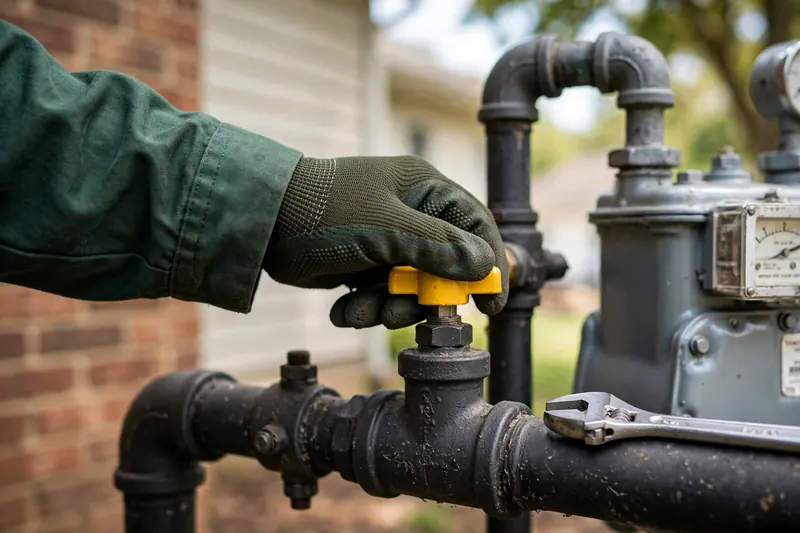
Q: Who owns the line from the meter to my stove?
A: The utility owns the line up to the meter. Everything from the meter into the house, including the line to your stove, is customer-owned, and its repair is your responsibility. If you are unsure where the split is, the utility can confirm it.
New Hookups
New Gas Appliances And Outdoor Lines
A new gas range, a gas dryer, an outdoor grill stub-out, or a fire pit all need the same three things: a line sized to the load, a shutoff within reach, and a pressure test before first use. Permits and inspections apply to new gas work, and we handle them as part of the job. If you are moving a range during a kitchen remodel, our kitchen remodel plumbing page covers the rest of that project. If the new appliance is a gas water heater, our water heater repair page covers sizing and venting.
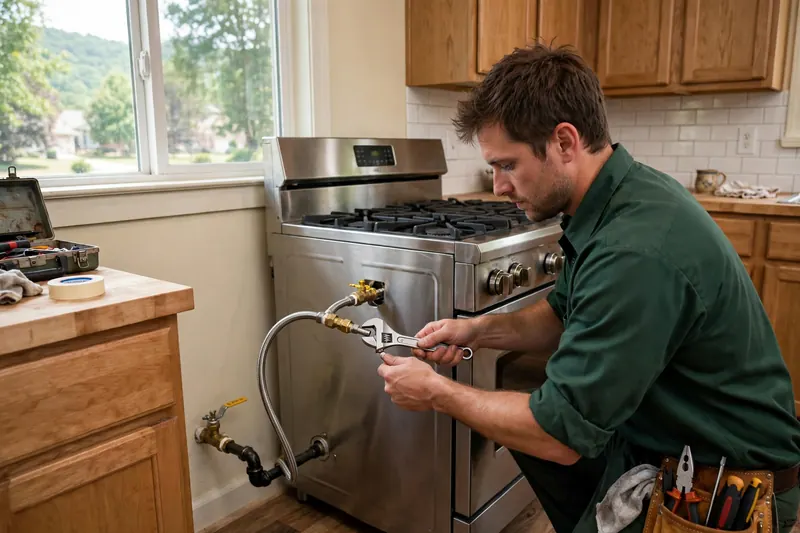
Permits And Inspections
Permits, Inspections, And Pressure Tests
New gas work usually needs a permit and an inspection, and the pressure test is the proof. We pressurize the line, hold it, and check every joint before the appliance fires. The inspector verifies the same things: correct pipe size, proper supports, reachable shutoffs, and a tight system. We handle the permit and schedule the inspection as part of the job, so the appliance is legal and safe on its first day.
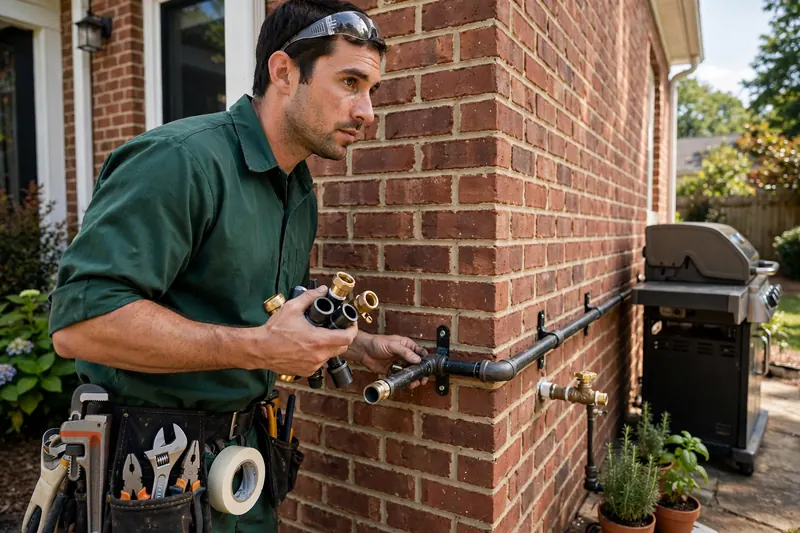
Related Services
More Help For This Problem
Gas lines feed appliances across the house. These pages cover the work around them.
- Kitchen remodel plumbing for range moves and gas hookups
- Water heater repair for gas water heaters
- Plumbing for businesses with gas appliances
- Everyday household plumbing repair for the rest of the house
- Contact Plumber Repair Pro to book a visit
We run gas lines across Spring Hill, including Campbell Station, on both the Maury and Williamson County sides. See our first 10 minutes of a plumbing emergency guide for gas-smell response steps.
Questions
Frequently Asked Questions
Leave the house at once, get everyone out, and call 911 and your gas utility from a safe distance. Do not flip switches, do not use a phone inside, and do not go back in to look for the source.
No. Gas work needs a licensed pro, a permit where required, and a pressure test before the line goes back into service. Do not attempt a DIY repair on a gas line.
New gas work usually needs a permit and an inspection. We handle permits for the jobs that need them and tell you what the inspection covers.
Yes. Call 811 before any digging in your yard so buried utilities, including gas lines, can be marked. It is free, and it is the step that prevents the worst accidents.
The rotten-egg odor, hissing near a line or appliance, dead vegetation over a buried run, and an unexplained bill climb are the signs. If you notice any of them, leave and call from outside.
Ready When You Are
Gas Work Needs A Pro. Call Us.
New hookup, extension, or suspected leak: leave first if you smell gas, then call. We handle the rest, permitted and pressure-tested.
Licensed & Insured · Locally Owned & Operated