New Construction Plumbing in Spring Hill, TN
New home, still verify. Three inspections, not one: rough-in, final walkthrough, and the 11-month check before the warranty clock runs out.
Licensed & Insured · Locally Owned & Operated
Mon–Fri 7AM–7PM · Sat 8AM–4PM · 24/7 Emergency
Verify, Don't Assume
New Builds Deserve Verification
New-build pipework deserves verification, not trust. Buyers assume new means perfect, but final-walkthrough checklists repeatedly catch drips, running toilets, loose fixtures, and untested shutoffs. See our Spring Hill plumbing homepage for the full service list, and this page for the new-build side.
Direct answer: how plumbing works in construction is a sequence: underground, rough-in, trim, test. Each stage hides the last one, so each stage needs its own check before the next covers it.
Rough-In: The Last Cheap Moment
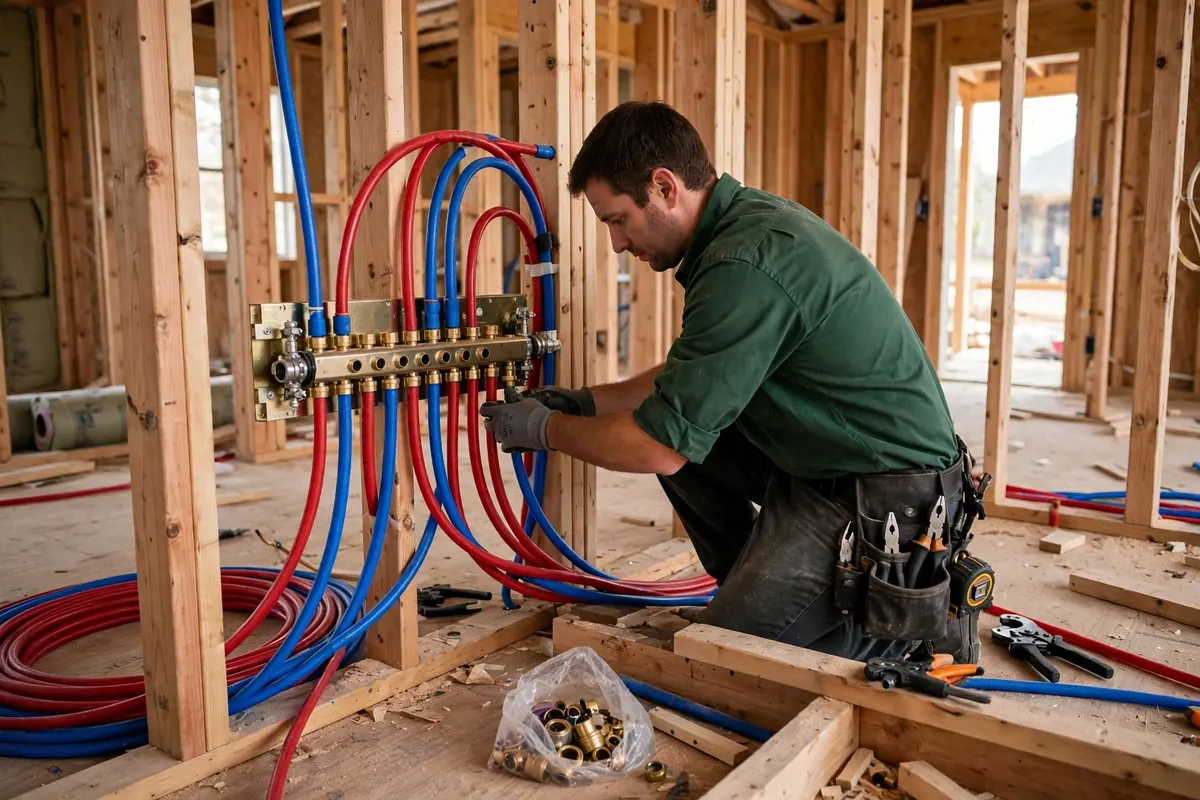
The build moves fast, and the cheap moment to catch a mistake is before drywall. The rough in plumbing inspection is the last cheap moment to catch slope, sizing, and venting mistakes, plus pipe protection where pipes pass through framing. A pipe that rubs a nail plate, a drain with no slope, or a vent that goes nowhere is a small fix at rough-in and a wall-opening fix after drywall.
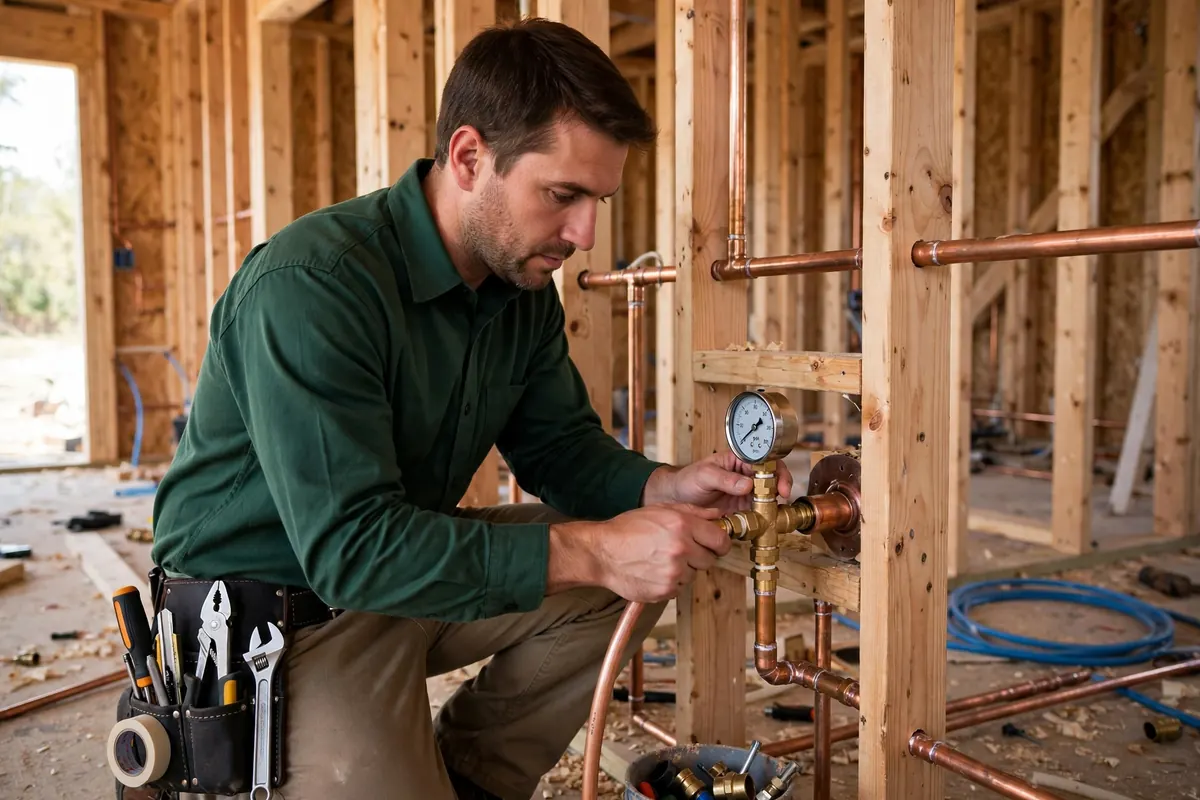
Plumbing construction at this stage is about what you cannot see later: pipe sizing, slope, venting, nail plates, and shutoff locations. We check the layout against the fixture plan, because a rough-in that lands six inches off the vanity is a vanity that will not fit. A plumbing walkthrough new home buyers do at handover should test every fixture, but the rough-in check is the one that catches the mistakes handover cannot see.
Licensed & Insured · Locally Owned & Operated
Final Walkthrough: Test Everything
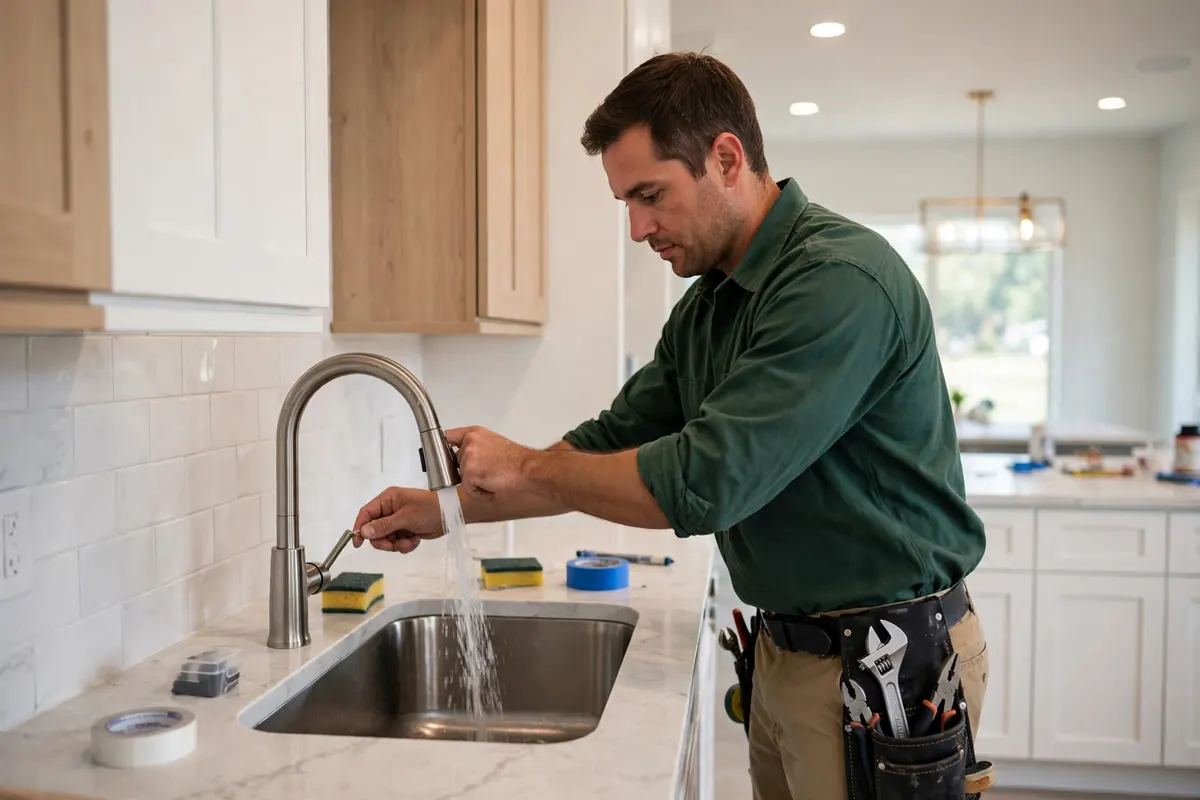
At final walkthrough, run every faucet, flush every toilet, check under every sink, test every shutoff, and look for drips, running toilets, and loose fixtures. Note anything in writing and get it into the builder punch list before closing. A shutoff that will not close, a toilet that runs, or a faucet that drips is a builder fix now and your bill later.
Builder-grade fixtures and valves are a recurring complaint: early failures soon after move-in. Upgrading the valves and shutoffs first is usually smarter than upgrading the visible trim, because the valves are what leak. Shutoff labeling is the small detail that pays off in an emergency: every shutoff labeled, so nobody hunts for the right valve while water spreads.
Licensed & Insured · Locally Owned & Operated
The 11-Month Inspection and Who Owns What
The 11-month inspection is the safety net owners say they forget. Seasonal cycling reveals leaks and settlement issues that were invisible at move-in, and this inspection catches them while the builder still owns them. Put it on the calendar at move-in, not at month eleven, because the warranty clock does not pause for a busy schedule.
Owners ask who is responsible for what: builder warranty versus manufacturer warranty versus homeowner maintenance. The builder warranty usually covers installation and workmanship, the manufacturer warranty covers the fixture or appliance itself, and homeowner maintenance covers everything after that. Keep the split in writing so a claim goes to the right party. The Tennessee contractor licensing board page explains who must be licensed for this work.
Licensed & Insured · Locally Owned & Operated
Related: everyday household plumbing repair, water heater repair, kitchen remodel plumbing, bathroom remodel plumbing, contact us.
New Construction Questions
Yes. An independent look catches what a busy walkthrough misses: a drip behind a vanity, a running toilet, a loose fixture, or an untested shutoff. Three inspections beat one: rough-in, final walkthrough, and the 11-month check.
Run every faucet, flush every toilet, check under every sink, test every shutoff, and look for drips, running toilets, and loose fixtures. Note anything in writing and get it into the builder punch list before closing.
It is a check before the builder warranty expires, usually near the end of the first year. Seasonal cycling reveals leaks and settlement issues that were invisible at move-in, and this inspection catches them while the builder still owns them.
Sometimes. Builder-grade faucets, valves, and supply lines are a recurring source of early failures. Upgrading the valves and shutoffs first is usually smarter than upgrading the visible trim, because the valves are what leak.
The builder warranty usually covers installation and workmanship, the manufacturer warranty covers the fixture or appliance itself, and homeowner maintenance covers everything after that. Keep the split in writing so a claim goes to the right party.
Ready When You Are
Buying New? Verify It Before the Warranty Clock Runs.
Call now to schedule a rough-in, walkthrough, or 11-month inspection. Mon–Fri 7AM–7PM, Sat 8AM–4PM, 24/7 for emergencies.
Licensed & Insured · Locally Owned & Operated