Tank + Field + Habits
Septic Tank Services in Spring Hill, TN
Septic is a system, not a tank. The tank, the drain field, and what goes down your drains all decide whether the system works or backs up.
Licensed & Insured · Locally Owned & Operated
Mon–Fri 7AM–7PM · Sat 8AM–4PM · 24/7 Emergency
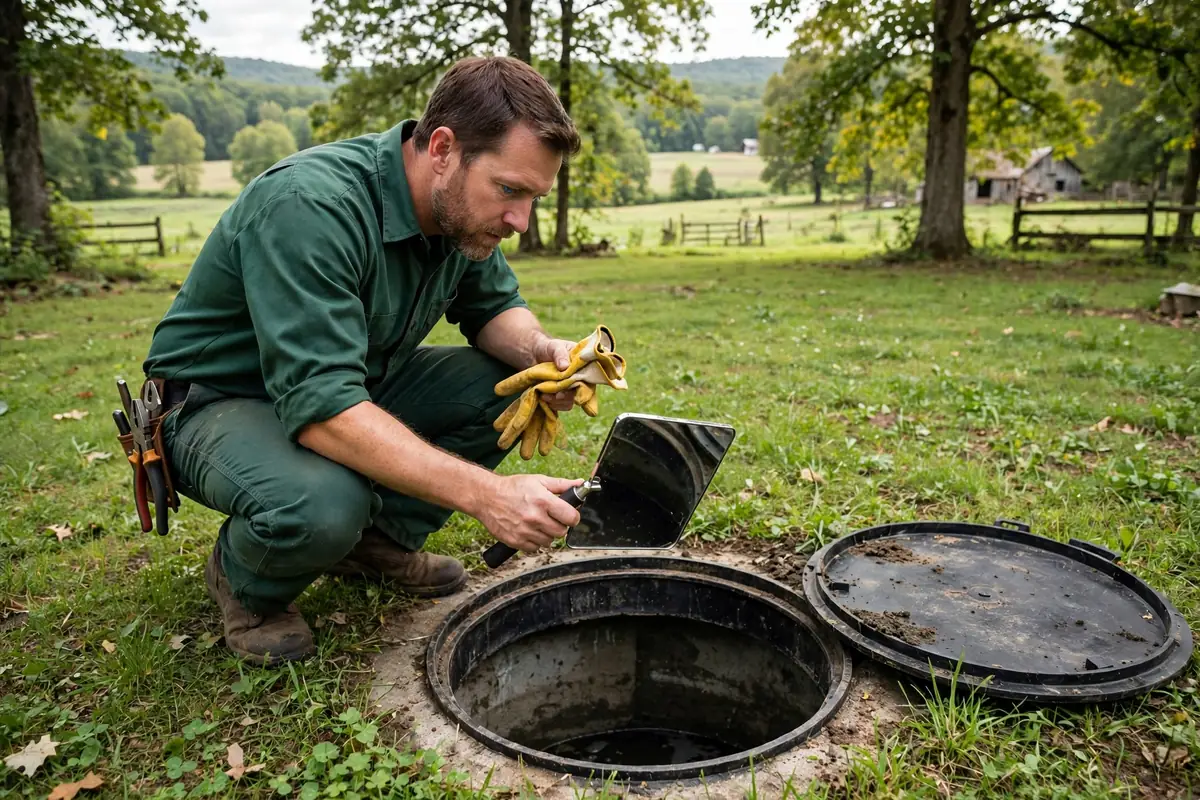
Septic Is A System, Not A Tank
Tank, Field, And Household Habits Together
Owners new to septic ask the same three questions: how often to pump, what not to flush, and where the tank and field actually are. The answers matter because a septic system has no city backup. When it fails, it fails into your yard and your house, and the repair is bigger than the pumping visit that would have prevented it.
Septic plumbing covers the tank, the field, and the pipes between them. If you searched for septic tank repair near me, start by describing the symptom: slow drains across the house, gurgling, odor, wet spots over the field, or a backup. Each one points to a different part of the system.
Septic Tank Services
Pumping, Inspection, And Repair
Septic tank plumbing starts with the tank itself: a watertight, usually two-compartment chamber where solids settle, scum floats, and the liquid effluent flows on to the drain field. Pumping removes the accumulated sludge and scum that bacteria cannot break down fast enough. Septic tank pumping frequency depends on household size, tank size, and use, and the right interval for your house is set at the inspection, not from a chart.
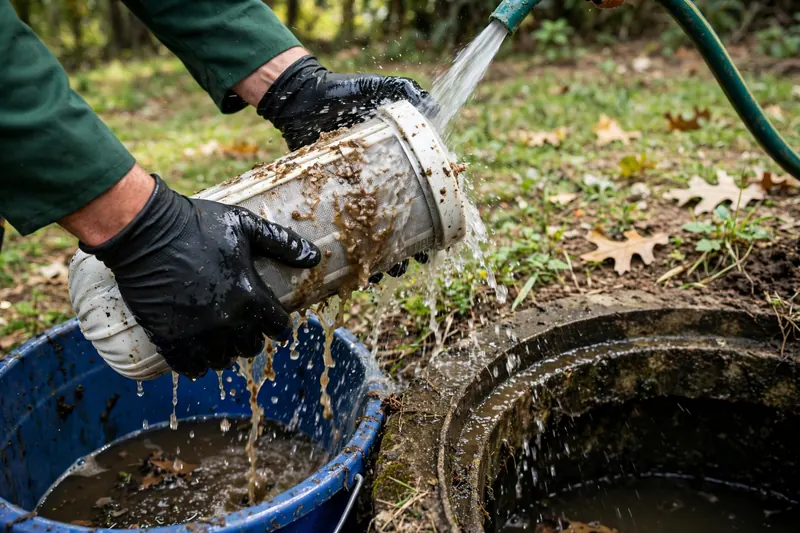
If you are looking for septic plumbers near me, ask whether the visit includes an inspection of the baffles, the effluent filter, and the field, not just a pump-out. Our team inspects the baffles, the effluent filter, and the field on every visit, not just the tank. A pump-out without an inspection misses the early warnings. Septic drain field failure signs include slow drains across the whole house, gurgling, sewage odor, wet or lush patches over the field, and backups at the lowest fixture. A field that is failing needs a diagnosis before it needs a replacement, because the cause may be a crushed line, a clogged filter, or years of overload rather than a dead field.
What goes down the drain decides the life of the system. Grease, wipes, feminine products, and harsh chemicals are the system killers, and a leaking fixture matters more on septic than on city sewer, because continuous flow overloads the field. A septic tank is a living system, and the how a septic tank works overview explains the settling and digestion that make it work.
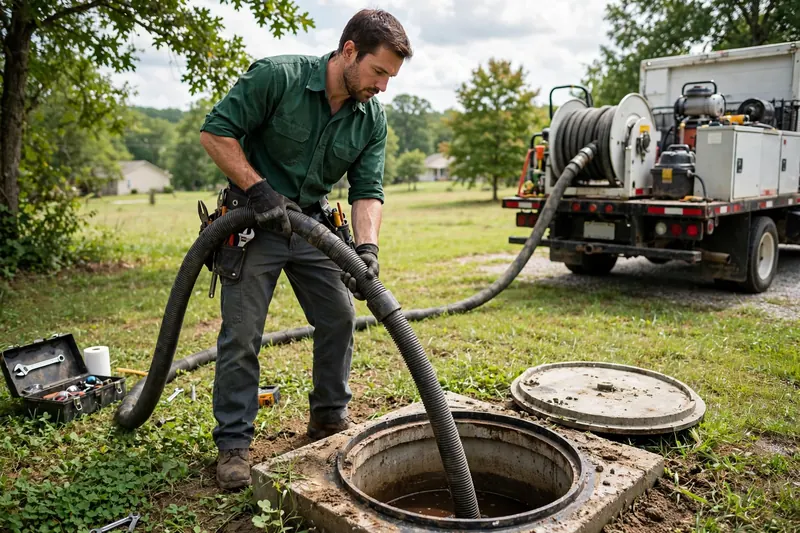
Q: How often should I pump?
A: It depends on household size, tank size, and use. We set your interval at the inspection and note it on the visit report, so you are not guessing next time.
Household Habits
What Never Goes Down The Drain On Septic
Grease, wipes of any kind, feminine products, cat litter, and harsh chemicals never go into a septic system. They either clog the tank, kill the bacteria, or overload the field. Fix leaking fixtures promptly, because a running toilet on septic is a field-flooding machine. Spread laundry loads across the week instead of running them all in one day, so the field gets time to absorb each dose. Our everyday household plumbing repair page covers the fixture leaks that matter most on septic, and our septic maintenance guide for Maury County walks through the yearly routine.
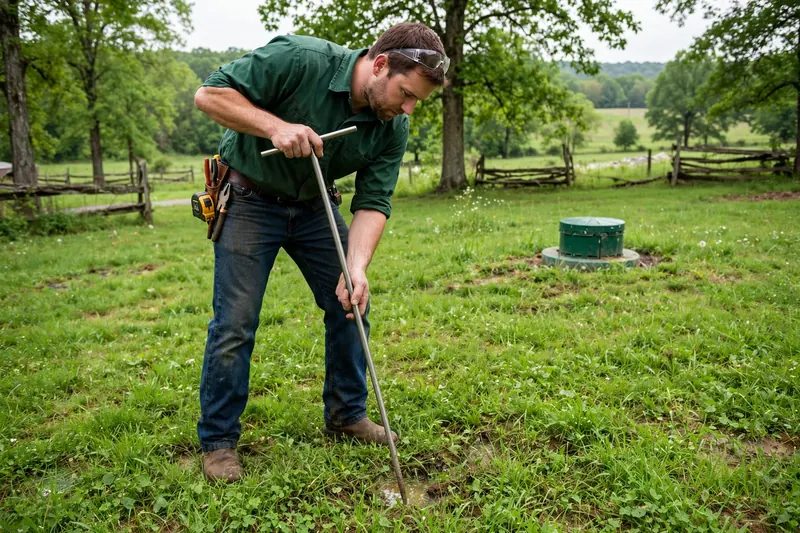
Field Care
Protecting The Drain Field
The drain field is where the treated effluent returns to the soil, and it needs air, soil, and space. Never park, pave, or build over it. Keep roof drains and surface water away from it. Know where it is before you dig, plant trees, or add a driveway. If the grass over the field is greener and wetter than the rest of the lawn, call us before it becomes a backup. Permits for repairs come through the county, and we will tell you what your job needs.
Related Services
More Help For This Problem
Septic homes still have the same fixtures, drains, and water systems as city-sewer homes. These pages cover them.
- Sewer line repair for city-sewer homes
- Everyday household plumbing repair for fixture leaks
- Well pump services for well-water homes
- Plumbing for businesses with septic or sewer loads
- Contact Plumber Repair Pro to book a visit
We serve septic homes across the Spring Hill fringe, including the Maury County side. See our septic maintenance guide for Maury County for the yearly routine.
Questions
Frequently Asked Questions
Slow drains across the house, gurgling, odor, and a scum or sludge layer that has reached the outlet are the signs. An inspection measures the layers and tells you for sure.
Grease, wipes of any kind, feminine products, cat litter, and harsh chemicals. They clog, kill bacteria, or overload the field.
Extra moisture and nutrients reach the surface when the field is wet. A greener, wetter patch than the rest of the lawn is an early warning, not a lawn improvement.
The county handles septic permits. We tell you what your job needs and handle the paperwork for the work we do.
Yes. Continuous flow overloads the field and shortens its life. Fix leaking fixtures promptly on a septic system.
Ready When You Are
Septic Trouble? Start With An Inspection, Not A Guess.
Tell us the symptom: slow drains, gurgling, odor, wet spots, or a backup. Each one points to a different part of the system.
Licensed & Insured · Locally Owned & Operated