Water Softener & Filtration Spring Hill TN | Hard Water Treatment Near Me
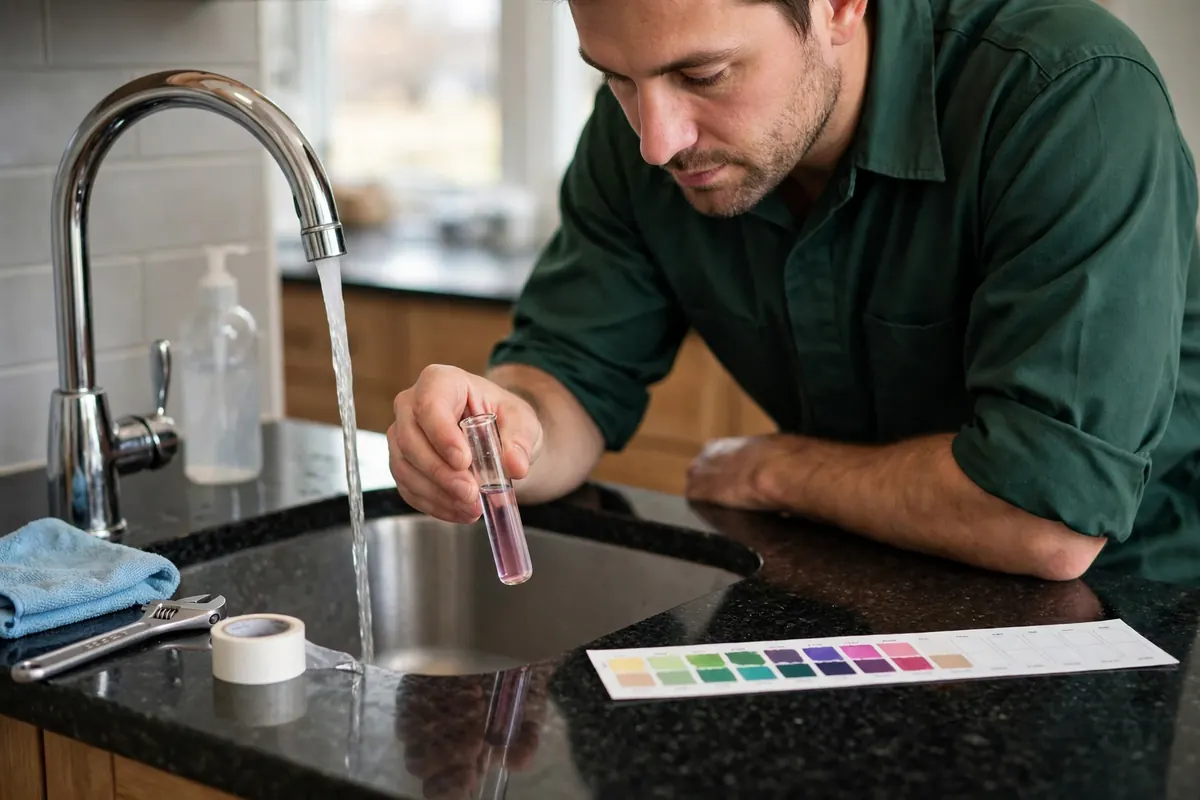
If the white crust keeps coming back after you clean it, the problem is in the water, not the faucet. Test first, then size the system.
Licensed & Insured · Locally Owned & Operated
Mon–Fri 7AM–7PM · Sat 8AM–4PM · 24/7 Emergency
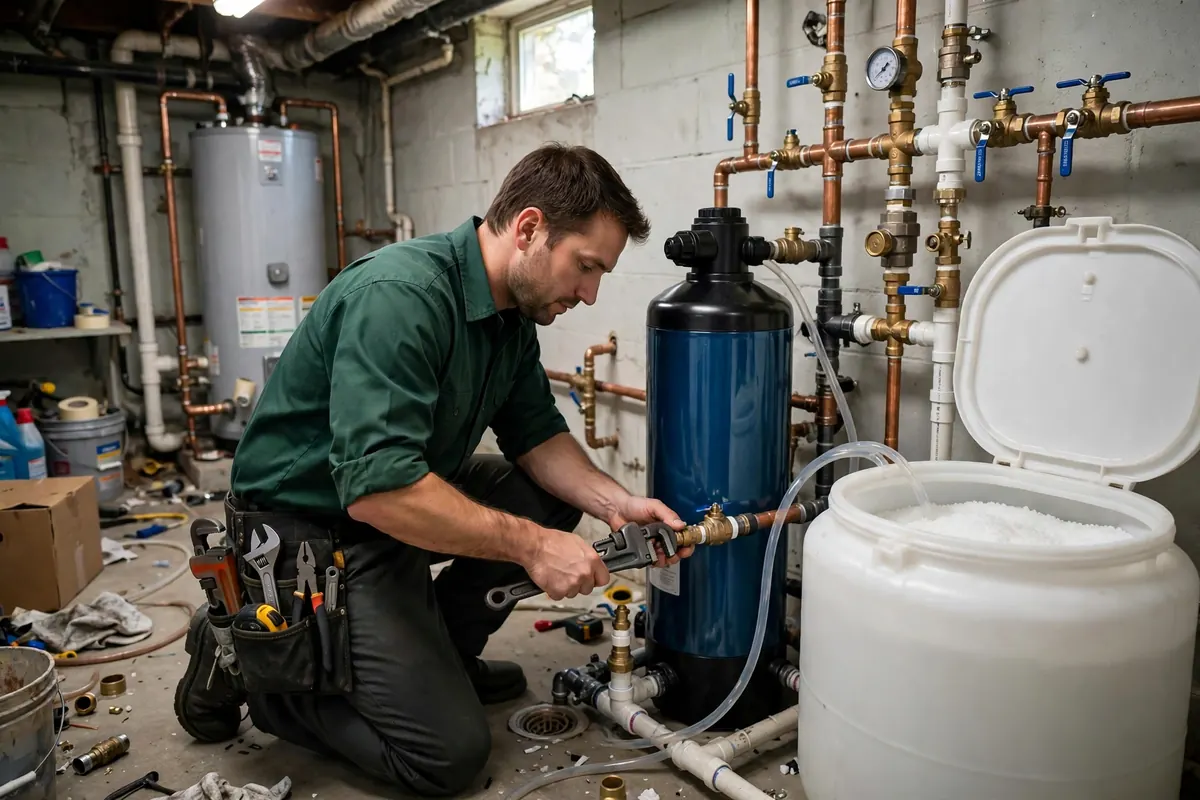
Test First
Why Spring Hill Water Is Hard
Spring Hill sits on limestone geology, and limestone means calcium and magnesium in the water. That is what hard water is: dissolved hardness minerals, measured in grains per gallon or parts per million. See the Plumber Repair Pro homepage for the full service list, or stay here for the water-quality side.
Direct answer: hard water is not a health emergency. It is a scale, soap, and appliance problem. Test your water, then choose the system that matches what the test shows.
The symptoms homeowners name first are the same across Spring Hill: white crusty buildup around faucets and showerheads, soap scum on shower doors, spotty and cloudy dishes no matter how well they rinse, soap that will not lather, dry itchy skin, dull brittle hair, and laundry that looks flat. The Spring Hill 2018 water quality report listed a historical average around 124 ppm, which is moderately hard water. That figure is historical, not today's reading, so a fresh test decides what your home actually needs. Hard water explained covers the geology behind it.
Appliance damage is the cost anxiety behind the symptoms. Scale inside water heaters, dishwashers, washing machines, and coffee makers makes equipment work harder, use more energy, and wear out sooner. Tankless water heaters are a special worry: scale on the heat exchanger is a recurring problem when descaling is skipped. A softener is the one system that protects every appliance at once, because it treats the water before it reaches them.
Licensed & Insured · Locally Owned & Operated
Water Softener Installation, Repair & Replacement
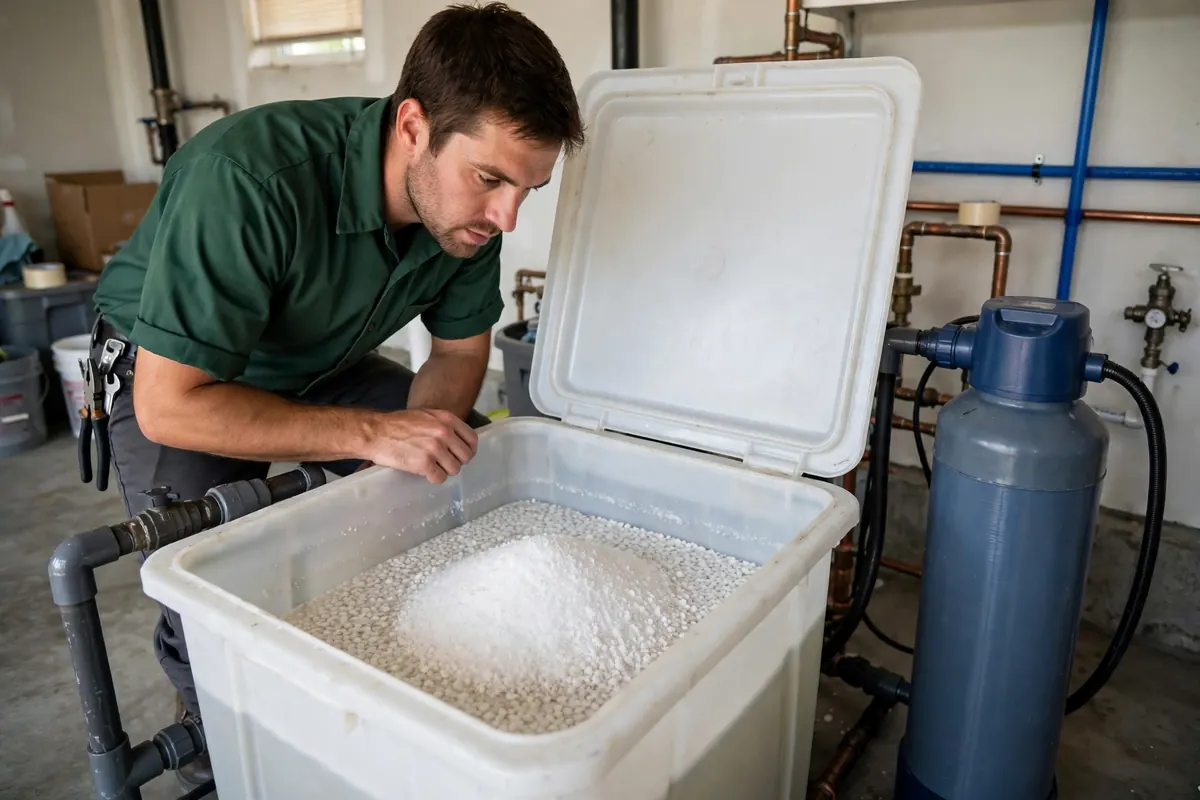
A salt-based softener uses ion exchange to remove hardness minerals from the water. Hard water passes through a resin bed, calcium and magnesium are swapped for sodium, and the softened water flows to the house. When the resin is spent, the system runs a regeneration cycle: the brine tank flushes the resin with salty water, the hardness washes away, and the cycle starts again.
A salt-free conditioner does something different. It changes how minerals behave so they are less likely to stick, but it does not remove hardness. Many buyers feel misled after purchase because the labels sound alike, so ask which one a quote is actually selling. If your problem is scale on fixtures and appliances, you need removal, not conditioning. If your water is only slightly hard and you want to avoid salt, conditioning may be enough, and a test decides which.
A water softener salt refill schedule depends on use and hardness; check the brine tank level monthly. If scale returns between visits, the regeneration cycle, the salt level, or the resin itself is the suspect, in that order. When a softener is due for replacement, sizing starts from hardness, household size, and peak demand, not from the size of the old unit.
Licensed & Insured · Locally Owned & Operated
Water Filtration System Installation, Repair & Replacement
Filtration answers a different question from softening: what is in the water besides hardness. Chlorine taste and smell, sediment, rust stains, and occasional rotten-egg sulfur odor are the filtration-side complaints. City-water homes in Spring Hill more often ask about chlorine and hardness. Well-water homes ask about iron, sulfur, and variable mineral content. The filter is chosen by what the test shows, not by the catalog.
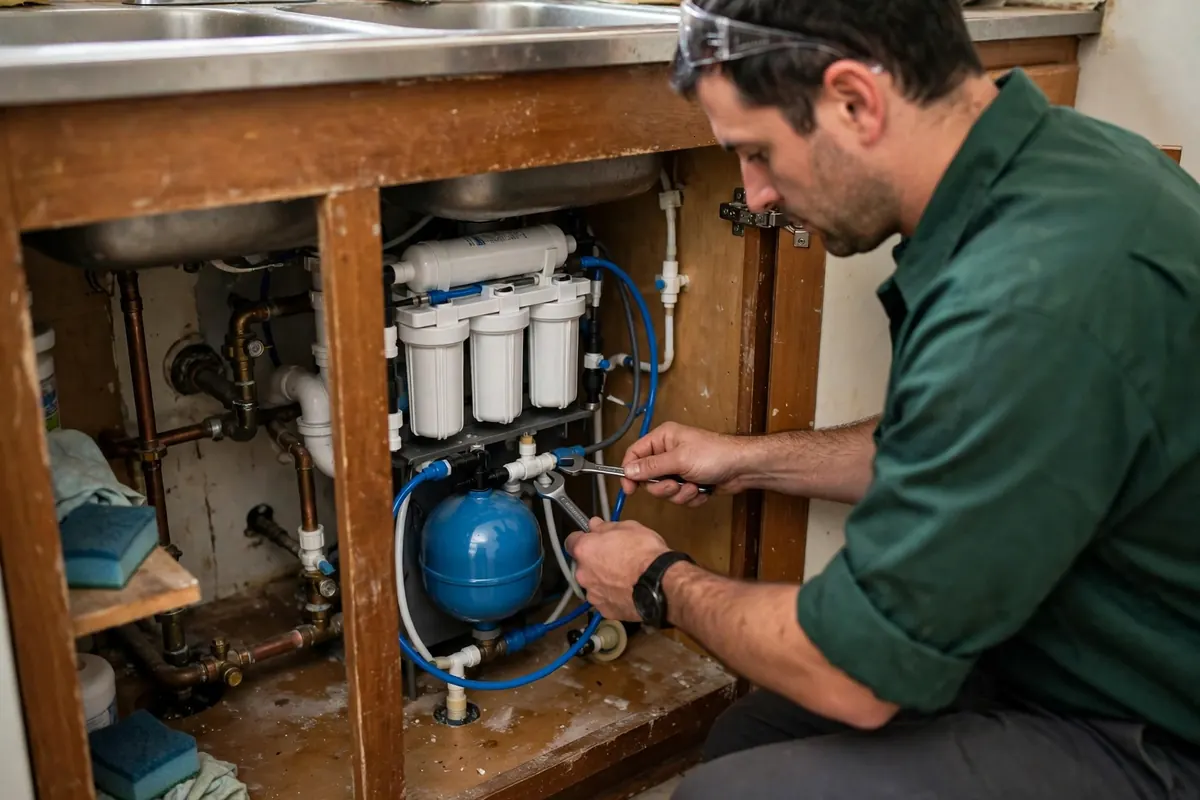
Whole-house filtration treats every tap: a sediment filter catches grit, a carbon filter takes on chlorine taste and odor, and the two together protect fixtures and appliances. Reverse osmosis drinking water systems sit under one sink and treat one tap for drinking-water taste and contaminant reduction. Whole-home reverse osmosis is rarely needed for hardness alone, and it filters slowly, wastes water, and needs a storage tank. For most homes, the right pairing is a softener for the whole house plus reverse osmosis at one drinking tap.
Softened water protects a water heater by keeping scale off the tank and heat exchanger. For plants, use unsoftened water where you can. For septic systems, tell us you have one before sizing, so the regeneration discharge is planned correctly. If a softener or filter was sold to you with verbal-only pricing or no written scope, ask for the scope in writing before you approve it.
Licensed & Insured · Locally Owned & Operated
Related: water heater repair, sink and faucet services, everyday household plumbing repair, contact us.
Water Softener & Filtration Questions
Yes, test first. Spring Hill sits on limestone geology, and the city 2018 water quality report listed a historical average around 124 ppm. That figure is historical, not today's reading, so a fresh test decides what your home actually needs.
A salt-based softener uses ion exchange to remove hardness minerals from the water. A salt-free conditioner changes how minerals behave so they are less likely to stick, but it does not remove hardness. They solve different problems, and the labels sound alike, so ask which one a quote is actually selling.
They are different tools. A softener treats whole-home hardness and scale. An under-sink reverse-osmosis unit treats one tap for drinking-water taste and contaminant reduction. Many homes need one, some need both, and a water test tells you which.
Softened water protects a water heater by keeping scale off the tank and heat exchanger. For plants, use unsoftened water where you can. For septic systems, tell us you have one before sizing, so the regeneration discharge is planned correctly.
Check the brine tank level monthly; use and hardness decide how often salt runs low. Sediment and carbon filters follow their own schedules, and the regeneration cycle should be checked on a service visit if you notice scale returning.
Ready When You Are
Test First, Then Size the System.
Call now to schedule a water test and a written scope. Mon–Fri 7AM–7PM, Sat 8AM–4PM, 24/7 for emergencies.
Licensed & Insured · Locally Owned & Operated