Dishwasher Installation & Hookup in Spring Hill, TN
Most dishwasher leaks are connection leaks, not appliance leaks. The supply, the shutoff, and the drain route decide whether the install stays dry.
Licensed & Insured · Locally Owned & Operated
Mon–Fri 7AM–7PM · Sat 8AM–4PM · 24/7 Emergency
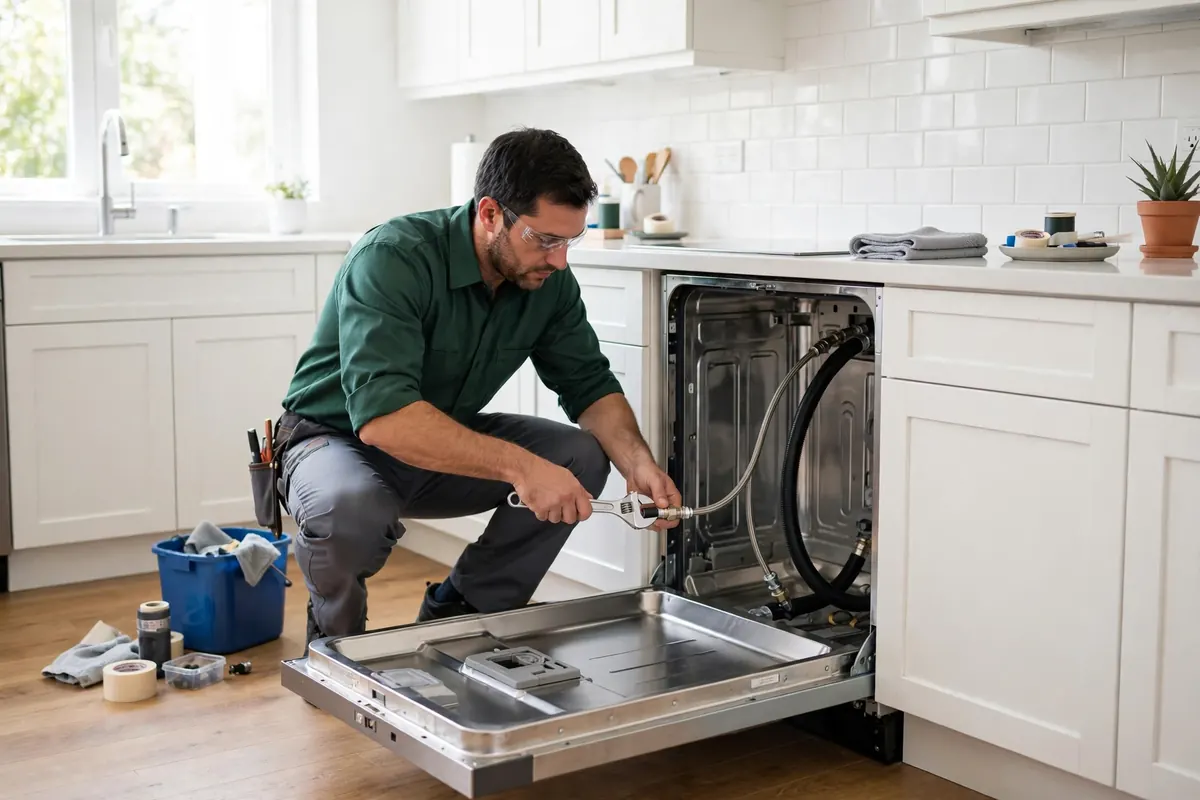
Supply, Drain, Shutoff
Dishwasher Install, Repair & Replacement
Dishwasher plumbing is the supply, drain, and shutoff work around the appliance, not the appliance itself. Our Spring Hill plumbing team handles that work: the hookup, the drain route, and the leak test that proves it.
Direct answer: a dishwasher install has four parts worth checking: a sound supply line, a shutoff that actually closes, a drain hose with a high loop or air gap, and a leak test long enough to catch a slow drip.
The Supply Side: Shutoff First
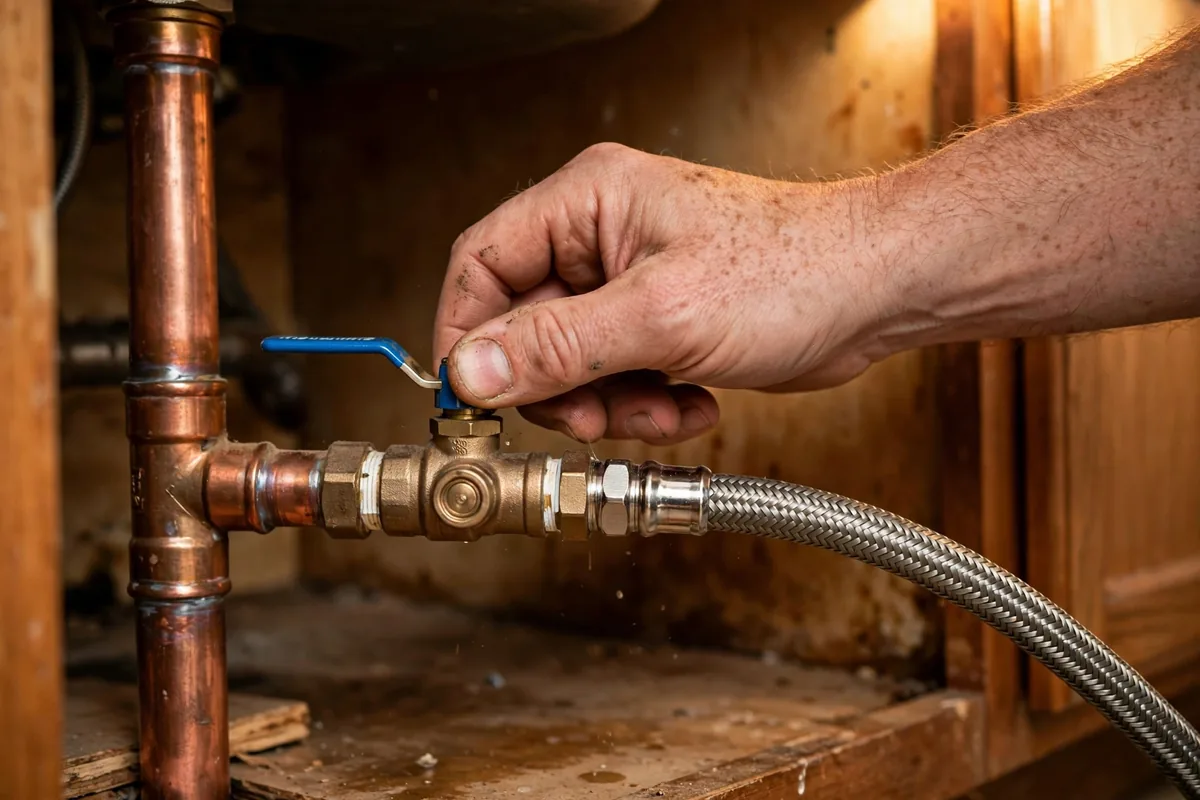
The weak link in many installs is not the new appliance. It is the old shutoff valve and supply line, which leak once they are disturbed after years of sitting still. Before we connect anything, we test the shutoff. If it will not close fully or weeps at the stem, we replace it while the appliance is already out, because a seized shutoff turns a future dishwasher swap into a water shutoff for the whole house.
Fit matters too. Cabinet opening, door clearance, and panel-ready fronts delay installs when they are measured after delivery instead of before. Tell us the model and the opening size when you call, and we will confirm what the hookup needs before we arrive.
Licensed & Insured · Locally Owned & Operated
The Drain Side: High Loop or Air Gap
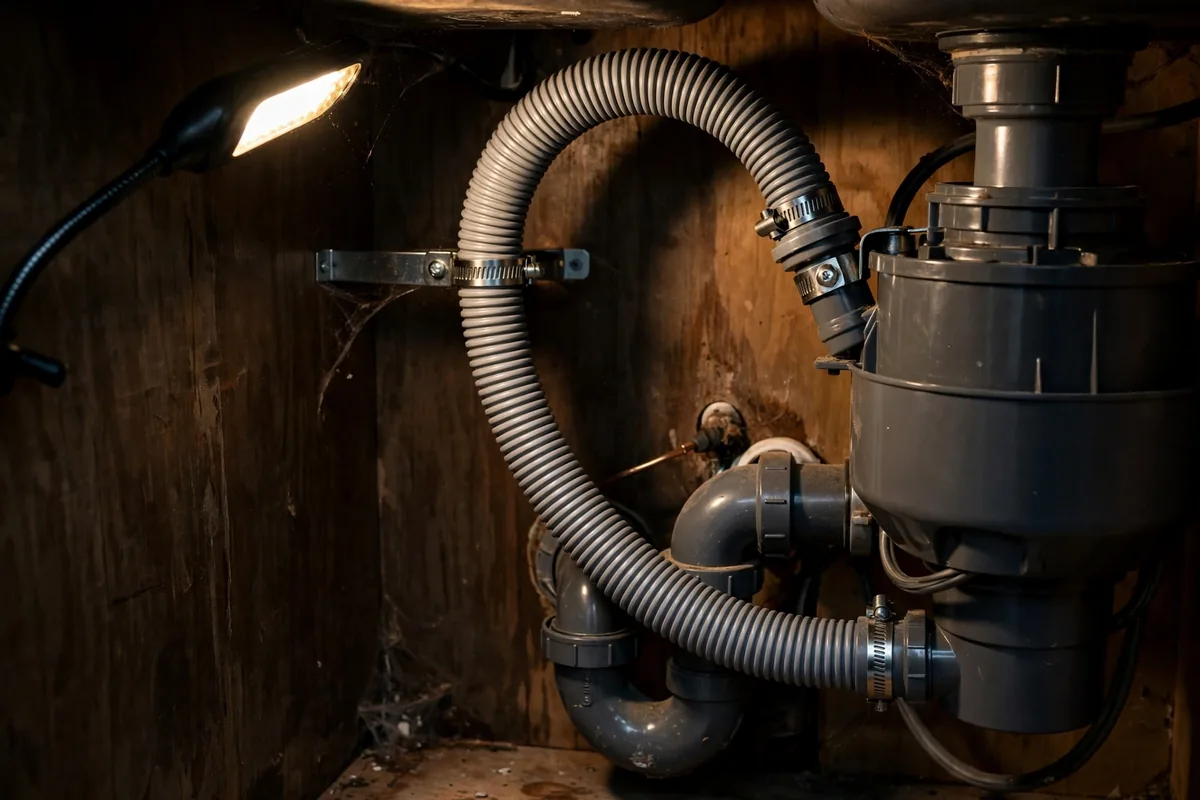
The most-cited install failure is wastewater backing into the dishwasher, and the cause is almost always the drain hose route. A dishwasher drain hose loop rises from the drain connection to near the countertop before dropping back down, so sink water cannot flow backward into the tub. An air gap fitting does the same job through a separate device on the sink or counter. Either way, the hose must climb before it falls, and it must stay put. A hose that sags into a low loop will back up sooner or later.
When a disposal shares the drain, the dishwasher drains through the disposal inlet, and a new disposal ships with that inlet plug in place. If the plug is not knocked out, the dishwasher cannot drain at all. That one missed step accounts for a large share of the no-drain calls after a kitchen change. How a dishwasher drains and fills is worth a quick read if you want the full cycle behind these connections.
The Leak Test That Catches Slow Drips
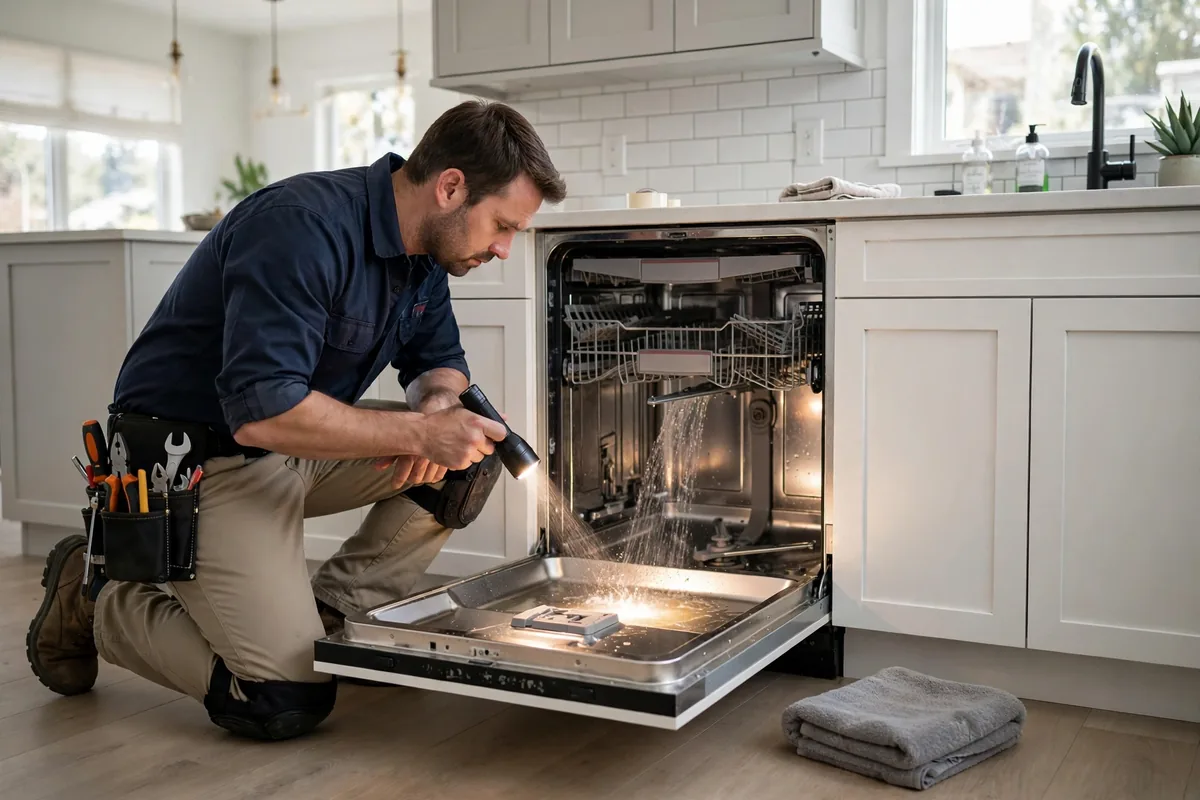
A new dishwasher can leak on day one from the supply connection, the drain connection, or a shutoff that was fine until it moved. The worst of these is the slow drip, which may take an hour to show on a cabinet floor. Our post-install test runs longer than a quick cycle, with a dry paper check under each connection at the end. If a connection weeps, we fix it before the appliance goes back in, not after the cabinet floor has soaked.
Hard water adds a wrinkle that gets blamed on the appliance. Spotting and poor cleaning often trace to supply temperature, water hardness, or softener context rather than the dishwasher. If your dishes come out cloudy in a Spring Hill home with hard water, tell us when you call, so we can check the supply side instead of swapping a working appliance.
Licensed & Insured · Locally Owned & Operated
Related: garbage disposal installation and repair, sink and faucet services, kitchen remodel plumbing, everyday household plumbing repair, contact us.
Dishwasher Questions
Usually the drain path is blocked: the disposal inlet plug was never knocked out, the drain hose is kinked or clogged, or the connection at the sink drain side is restricted. We check the path in order and show you the blockage before clearing it.
The drain hose is missing its high loop or air gap, so sink water can flow backward into the tub. A proper loop or air gap stops that backflow. We check the hose routing first, because a new appliance will not fix a routing problem.
It depends on what applies to your install. Some installs use a high loop, others need an air gap fitting on the sink or counter. Ask us to check what your setup calls for before the install, so the finished job passes inspection.
Most day-one leaks are connection leaks, not appliance leaks. The supply connection, the drain connection, or an old shutoff valve disturbed during the swap is where water shows up. A slow drip can take an hour to appear, which is why we test longer than a quick cycle.
Yes. A dishwasher can drain directly through its own connection. The disposal is a convenience, not a requirement, and the drain routing is set up differently when there is no disposal in the line.
Ready When You Are
New Dishwasher? Hook It Up Right the First Time.
Call now to schedule the hookup and leak test. Mon–Fri 7AM–7PM, Sat 8AM–4PM, 24/7 for emergencies.
Licensed & Insured · Locally Owned & Operated