Primary + Backup + Alarm
Sump Pump Installation & Repair in Spring Hill, TN
The pump that matters most is the one that runs when the power is out. We install primary pumps with battery backup and an alarm, so a storm does not become a flood.
Licensed & Insured · Locally Owned & Operated
Mon–Fri 7AM–7PM · Sat 8AM–4PM · 24/7 Emergency
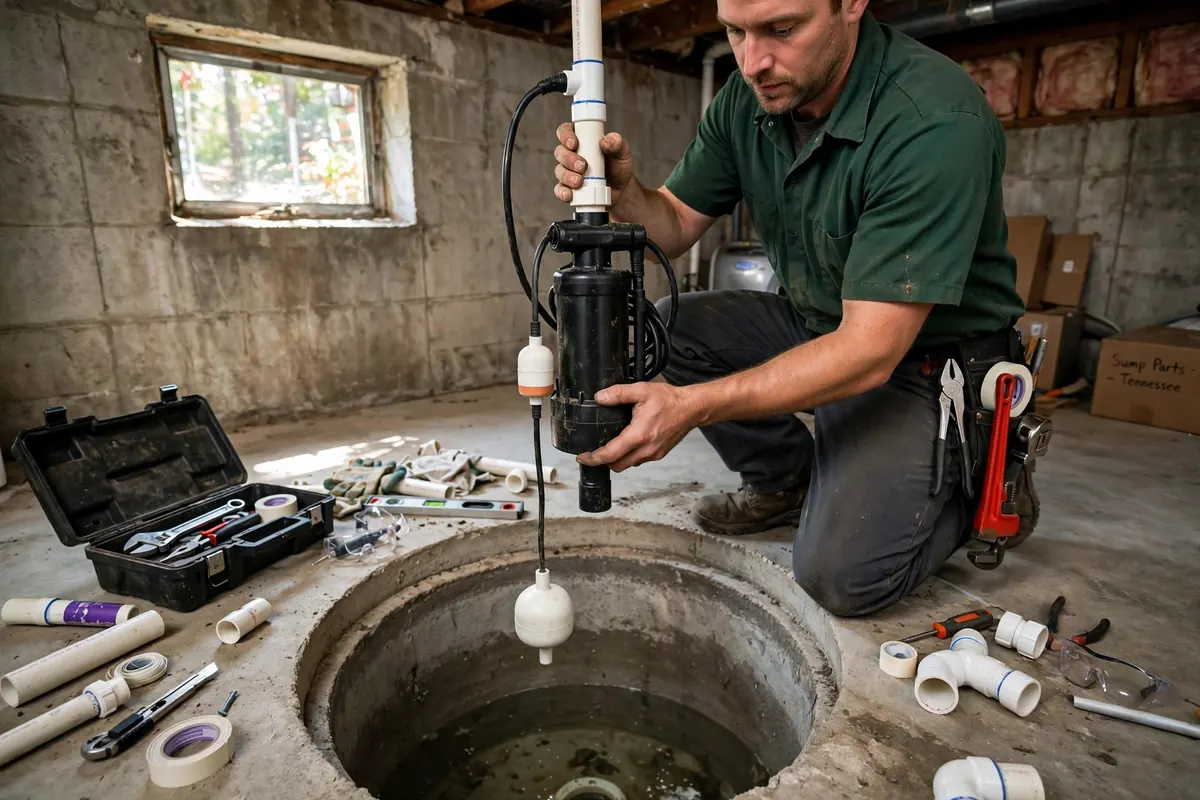
The Pump That Matters Runs When Power Is Out
Storm-Season Water Meets Clay Soil
Middle Tennessee homeowners with basements and crawl spaces worry most about storm-season water and power outages knocking out the primary pump. Clay soil drains slowly, so water lingers around foundations and finds cracks and joints. A sump system is the answer, but only if it has three parts: a primary pump, a backup that runs without grid power, and an alarm that tells you when something is wrong.
If you are dealing with standing water in a crawl space, a musty odor, or a pump that runs constantly or never runs, start with a diagnosis, not a pump swap. The symptom decides the fix.
Sump Pump Installation, Repair & Replacement
Primary Pump, Battery Backup, And Alarm
Sump pump plumbing is the discharge side as much as the pump itself. The pump lifts water from the pit, the discharge line carries it outside, and the check valve keeps it from flowing back when the pump stops. Get any one of the three wrong and the system looks like it works while the pit quietly refills.
Sump pump battery backup is the part that matters in a storm. When the power drops, the backup keeps the pit empty on battery, and the alarm tells you the primary is out. A sump pump not working usually means one of four things: no power, a stuck or failed float switch, a clogged intake or discharge, or a dead pump. Plumber Repair Pro tests in that order, because a float switch is a small fix and a pump is not.
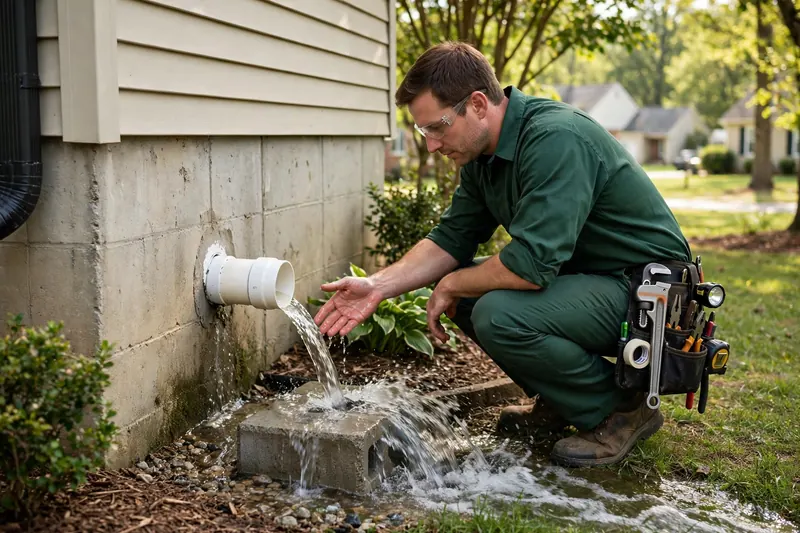
Discharge routing matters as much as the pump. Water must go outside and away from the foundation, not into the home drains and not against the wall it just came from. A discharge line that ends at the foundation just recycles the same water. We route it out, downhill, and away, with a freeze-resistant outlet where the climate demands it.
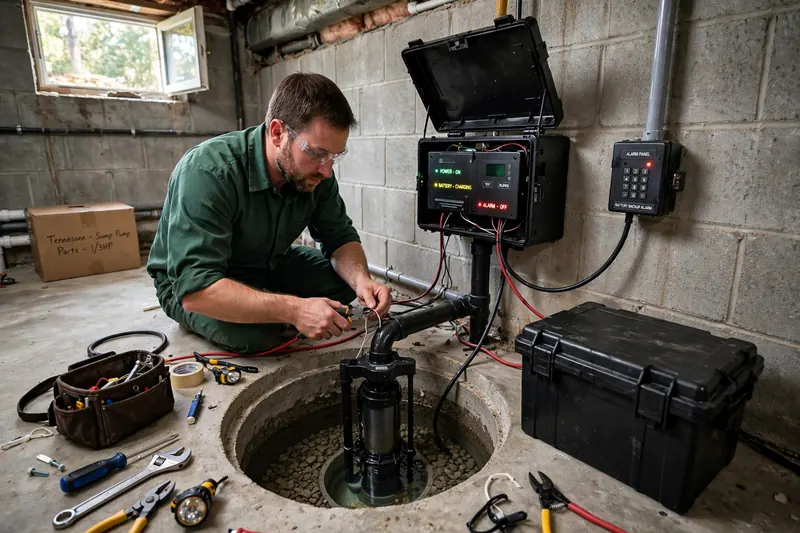
Q: Do I need a sump pump if I have a crawl space, not a basement?
A: Often yes. Crawl spaces collect water the same way basements do, and a sump pit with a pump keeps the space dry. A vented crawl space in a humid climate benefits from drainage plus encapsulation and dehumidification.
Sewage Pump Installation, Repair & Replacement
Sewage Pumps Are Not Sump Pumps: Different Systems, Different Jobs
A sump pump moves groundwater. A sewage pump, also called an ejector pump, moves wastewater from fixtures that sit below the sewer line, such as a basement bathroom. The two systems look similar, a pump in a pit, but they handle different water, different solids, and different failure modes. A sump pump must never be used for sewage, and a sewage pump must never discharge to the yard.
Sewage pumps live in a sealed basin with a vent, a check valve, and an alarm. They grind or pass solids, lift wastewater up to the sewer line, and seal against odor. When one fails, the symptom is a basement fixture that will not drain or a sewage odor at the basin. Repair means isolating the basin, clearing the pump, and testing the float and check valve. Replacement means matching the pump to the lift height and the fixture load, not just swapping the box.
If you have a basement bathroom, know which pump you have. A sump pit is open, takes groundwater, and discharges outside. A sewage basin is sealed, takes wastewater, and discharges to the sewer. If you are unsure, call us and we will identify it before anything is touched. Our septic tank services page covers homes where the sewage pump feeds a septic system, and the Wikipedia overview of plumbing systems explains how traps and drains fit together.
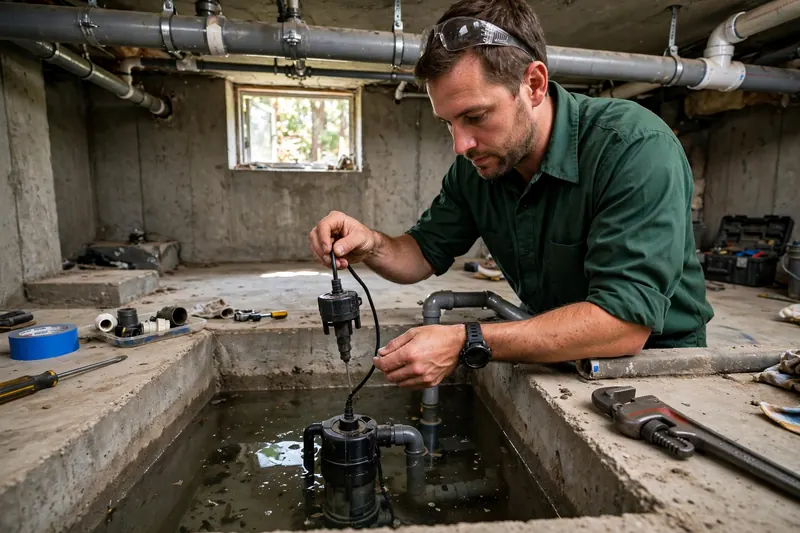
Q: Can a sewage pump and a sump pump share a pit?
A: No. They handle different water and discharge to different places. Sharing a pit mixes groundwater with wastewater and breaks both systems. Each needs its own basin, pump, and discharge.
Warning Signs
Signs Your Sump System Needs Attention
Standing water in the crawl space, a musty odor, mold on joists, efflorescence on the foundation wall, and a pump that runs constantly or never runs are the signs we hear most. A pump that runs constantly may be undersized, may have a failed check valve, or may be fighting a high water table. A pump that never runs may have a stuck float, no power, or a pit that is not collecting. Our emergency plumbing page covers the after-hours path when water is actively entering the house.
Related Services
More Help For This Problem
Sump systems meet storms, foundations, and sewage. These pages cover the jobs around them.
- Emergency plumbing when water is entering now
- Everyday household plumbing repair for the rest of the house
- Business plumbing with pits and lift stations
- Leak detection and repair for water you cannot explain
- Contact Plumber Repair Pro to book a visit
We install sump pumps across Spring Hill, including Wyngate Estates, on both the Maury and Williamson County sides. See our frozen pipe prevention guide for crawl-space winter care.
Questions
Frequently Asked Questions
Test it at the start of storm season and again after a heavy rain. Pour water into the pit, watch the float rise, and confirm the pump starts, the discharge runs clear, and the check valve holds.
The battery backup keeps the pit empty and the alarm tells you the primary is out. That is the whole point of a backup: the pump that matters runs when the power does not.
It may be undersized, the check valve may have failed, or the water table may be high. We test the valve, the float, and the discharge before condemning the pump.
Outside, downhill, and away from the foundation, never into the home drains and never against the wall it came from. A discharge that ends at the foundation just recycles the same water.
A sump pump moves groundwater out of a pit to the yard. A sewage pump moves wastewater from below-grade fixtures up to the sewer line. Different water, different basins, different discharge.
Ready When You Are
Water Where It Should Not Be? Fix The System, Not Just The Pump.
Tell us the symptom: standing water, a musty crawl space, a pump that never runs, or one that never stops. We will test in order.
Licensed & Insured · Locally Owned & Operated